
Holyrood Distillery distillery information
For almost a hundred years, Edinburgh made whisky history but didn’t make whisky. The city that once housed dozens of distilleries had gone without a single malt producer in its centre since the 1920s, its distilling story kept alive only by blending houses and bottlers. That changed on 30 July 2019, when Holyrood Distillery opened its doors on St Leonard’s Lane, a few minutes’ walk from Holyrood Park and Arthur’s Seat, and became the first new whisky distillery in central Edinburgh in nearly a century. Technically, that puts Holyrood in the Lowland region alongside East Lothian’s Glenkinchie, long nicknamed “the Edinburgh Malt” for its own proximity to the city, and a newer wave of Lowland openings that includes Kingsbarns and Lindores Abbey.
The distillery is the vision of Rob Carpenter, a Canadian who first sketched out the idea of a distillery and visitor experience in the heart of Edinburgh back in 2013. Rob and his wife Kelly had already founded the Canadian branch of the Scotch Malt Whisky Society, and the pair brought in David Robertson, a Scot with 25 years in the whisky trade, as co-founder. Robertson’s credentials run deep: his father managed Aberfeldy and Glendullan, David himself trained at Heriot-Watt University before an apprenticeship at Benrinnes, and by 26 he was the industry’s youngest distillery manager, running The Macallan before becoming its Master Distiller.
Day-to-day production has been led by distillery manager and head distiller Jack Mayo, whose background is in astrophysics rather than brewing, alongside a small team of Heriot-Watt-trained distillers.
A goods shed with 190 years of history
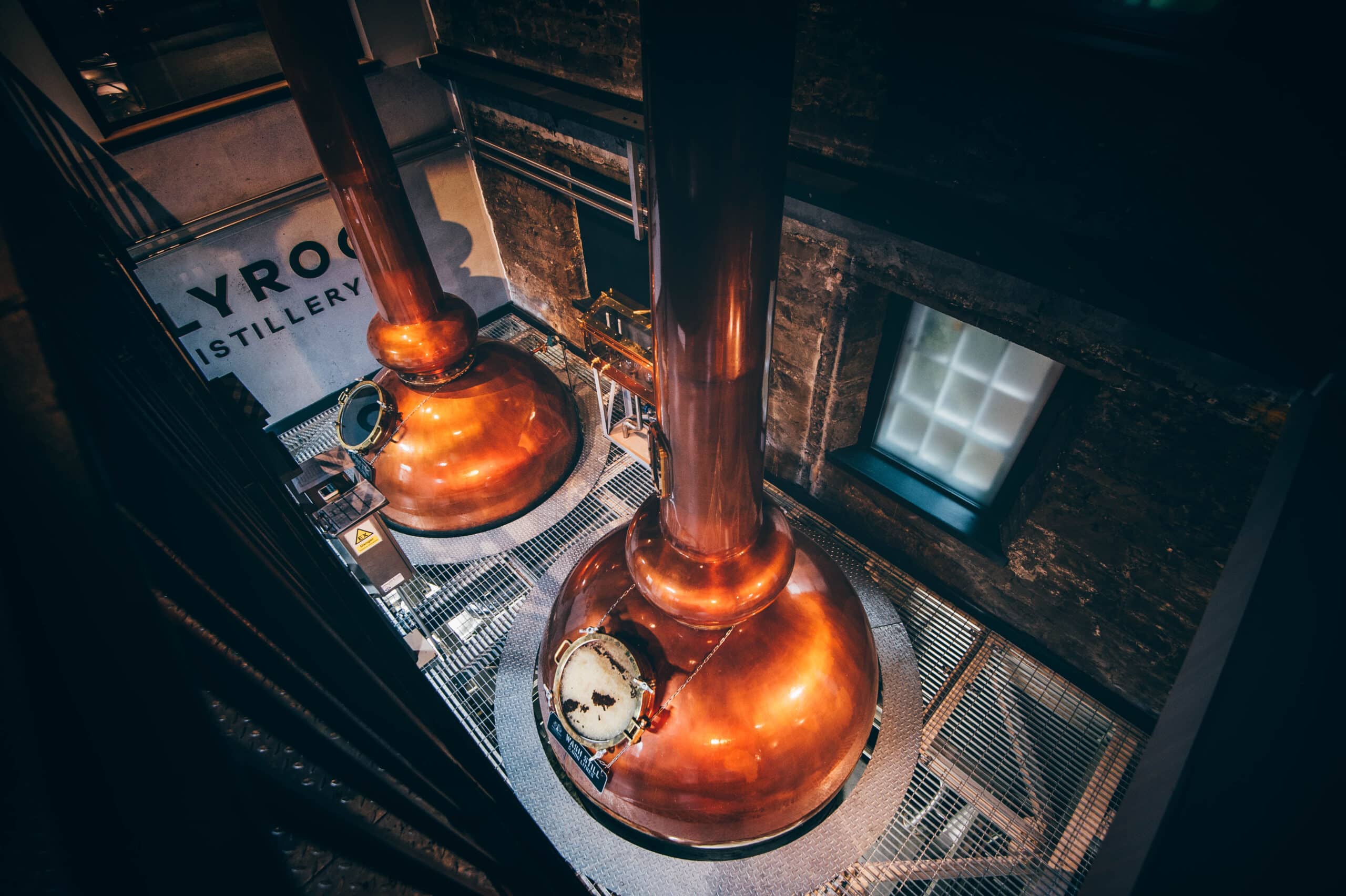
Holyrood occupies a three-storey Category B listed building dating to the 1830s, originally the goods shed for St Leonard’s railway station on the old Edinburgh to Dalkeith line. The conversion, designed by 7N Architects, kept the shed’s tall, narrow footprint largely intact, which shaped one of the site’s more unusual production decisions: the stills.
Flavour first, tradition second
Where most distilleries settle on a single house style and repeat it for decades, Holyrood set out to do the opposite. The team treats malt and yeast as the primary flavour levers rather than wood alone, working through specialty and heritage barley varieties, chocolate and black malts, and a rotating cast of yeast strains that includes wine and champagne yeasts alongside a strain sourced from Edinburgh’s own brewing history. Fermentation times are long and variable, running anywhere from roughly 48 to 168 hours depending on the profile the team is chasing, and the distillery has openly described its whisky-making as inspired by the city’s brewing heritage, right down to adapting recipes from historic Edinburgh beers.
That experimental approach carries a real cost: using standard malted barley the distillery can produce around 575 litres of spirit per run, but a run on black malt yields as little as three litres. It’s a trade-off the team has been willing to make in pursuit of flavour variety rather than volume.
Tall stills, tight spaces
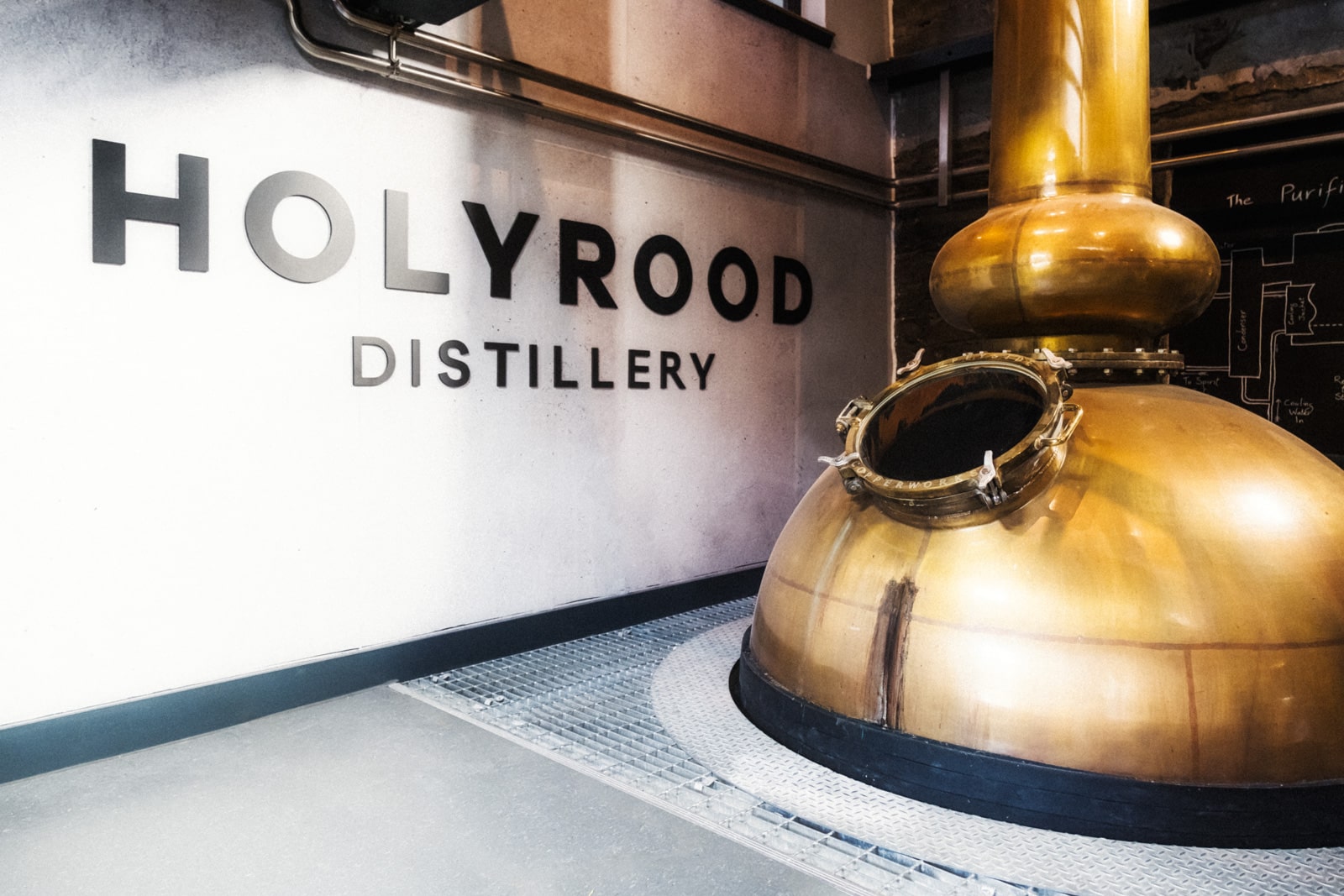
The building’s listed status meant the still house had to work within narrow, multi-storey rooms rather than the wide open floor most distilleries build around. Holyrood’s answer was to go up: its single wash still and single spirit still, both built by Speyside Copper Works, stand around seven metres tall, making them proportionally among the tallest stills in Scotland relative to their volume, second only to Glenmorangie‘s. The extra neck height gives the spirit more copper contact and a lighter, more refined character before it ever reaches cask. A semi-lauter mash tun and a bank of stainless steel washbacks (some visible on the tour, some tucked beneath the visitor walkway) complete the production line, viewed from a walkway that takes visitors directly over the stills.
Maturation draws on a similarly broad palette: ex-bourbon and European sherry casks form the backbone, with occasional use of mizunara, the Japanese oak prized for its incense-like character.
Visiting Holyrood
The distillery runs daily tours and tastings from its St Leonard’s Lane site, along with a shop and a bar looking out toward Holyrood Park. Its central location, close to Waverley Station, Edinburgh Castle and the Fringe’s Pleasance venues, has helped it become one of the city’s newer visitor draws alongside its whisky-making.
Holyrood Whiskies
- New Make Spirit – Holyrood’s unaged spirit straight off the still, sold as its own product line so drinkers can taste the distillery’s flavour choices before any cask influence. Released in several iterations built around different yeast and malt combinations (a “Brewer’s Series”).
- Arrival (2023) – the distillery’s debut single malt, released 6 October 2023 after four years of maturation and experimentation.
- Embra (2024) – the second single malt release and Holyrood’s first foray into peated whisky, released 15 March 2024. Triple cask matured across first-fill bourbon, peated Islay quarter casks and new American oak, using chocolate malt, heavily peated malt and passion fruit wine yeast among its ingredients.
Distillery info:
Detail |
Information |
|---|---|
| Name | Holyrood Distillery |
| Region | Lowland |
| Country | Scotland |
| Logo |  |
| Status | Active |
| Founded | 2019 |
| Water source | Glencorse Reservoir in the Pentland Hills |
| Malting floor | No |
| Owned by | Holyrood Distillery Ltd |
| Address |
19 St Leonard's Lane, |
| Visitor centre | Yes |
| Website | https://holyrooddistillery.co.uk |
| https://twitter.com/HolyroodWhisky | |
| https://www.facebook.com/holyrooddistillery/ | |
| Map |
Distillery Setup:
Component |
Capacity |
Quantity |
|---|---|---|
| Mash tun | 5 tonnes | 1 (Semi-lauter, stainless steel) |
| Washback | 5,000 litres | 6 (Stainless steel) |
| Wash still | 5,000 litres | 1 (Copper, Speyside Copper Works) |
| Spirit Still | 3,750 litres | 1 (Copper, Speyside Copper Works) |
| Expected yearly output in LPA (Litres of pure alcohol) | 200,000 |
Images courtesy of Holyrood Distillery.
Frequently Asked Questions
Edinburgh’s city centre had gone without a single malt producer since the 1920s, its distilling story kept alive only by blending houses and bottlers. That changed on 30 July 2019, when Holyrood Distillery opened on St Leonard’s Lane, a few minutes’ walk from Holyrood Park and Arthur’s Seat, becoming the first new whisky distillery in central Edinburgh in nearly a century. Holyrood technically sits in the Lowland region, alongside East Lothian’s Glenkinchie, long nicknamed “the Edinburgh Malt”, and a newer wave of Lowland openings including Kingsbarns and Lindores Abbey.
Holyrood is the vision of Rob Carpenter, a Canadian who first sketched out the idea of a distillery and visitor experience in the heart of Edinburgh back in 2013. Rob and his wife Kelly had already founded the Canadian branch of the Scotch Malt Whisky Society, and the pair brought in David Robertson, a Scot with 25 years in the whisky trade, as co-founder.
David Robertson’s father managed Aberfeldy and Glendullan. David himself trained at Heriot-Watt University before an apprenticeship at Benrinnes, and by age 26 he was the industry’s youngest distillery manager, running The Macallan before becoming its Master Distiller.
Holyrood occupies a three-storey Category B listed building dating to the 1830s, originally the goods shed for St Leonard’s railway station on the old Edinburgh to Dalkeith line. The conversion, designed by 7N Architects, kept the shed’s tall, narrow footprint largely intact, which shaped one of the site’s more unusual production decisions: its stills.
The building’s listed status meant the still house had to work within narrow, multi-storey rooms rather than a wide open floor. Holyrood’s answer was to go up: its single wash still and single spirit still, both built by Speyside Copper Works, stand around seven metres tall, making them proportionally among the tallest stills in Scotland relative to their volume, second only to Glenmorangie‘s. The extra neck height gives the spirit more copper contact and a lighter, more refined character before it reaches cask.
Rather than settling on a single house style, Holyrood treats malt and yeast as primary flavour levers, working through specialty and heritage barley varieties, chocolate and black malts, and a rotating cast of yeast strains that includes wine and champagne yeasts alongside a strain sourced from Edinburgh’s own brewing history. Fermentation times run anywhere from roughly 48 to 168 hours depending on the profile being chased, and the distillery has described its whisky-making as inspired by the city’s brewing heritage, right down to adapting recipes from historic Edinburgh beers. The approach carries a real cost: standard malted barley yields around 575 litres of spirit per run, while a run on black malt yields as little as three litres, a trade-off the team has been willing to make in pursuit of flavour variety over volume.
The range includes New Make Spirit, Holyrood’s unaged spirit sold as its own product line under a rotating “Brewer’s Series” of yeast and malt combinations; Arrival, the distillery’s debut single malt released on 6 October 2023 after four years of maturation and experimentation; and Embra, the second single malt and Holyrood’s first peated release, launched 15 March 2024 and triple-cask matured across first-fill bourbon, peated Islay quarter casks and new American oak, using chocolate malt, heavily peated malt and passion fruit wine yeast.
Yes. The distillery runs daily tours and tastings from its St Leonard’s Lane site, along with a shop and a bar looking out toward Holyrood Park.