
Glenburgie distillery information
The Glenburgy distillery was founded in 1810 by William Paul, using the name Kilnflat, near Alves, Moray in the Speyside region of Scotland. Production did not start until 1829, though, which is also when the first documented evidence of distillation taking place at the site started showing up. It closed in 1870, due to financial trouble, was renamed to Glenburgy in 1871, and revived in 1878, by Charles Kay, this time using the name Glenburgie-Glenlivet. In 1884, it was taken over by Alexander Fraser & Co. from nearby Elgin.
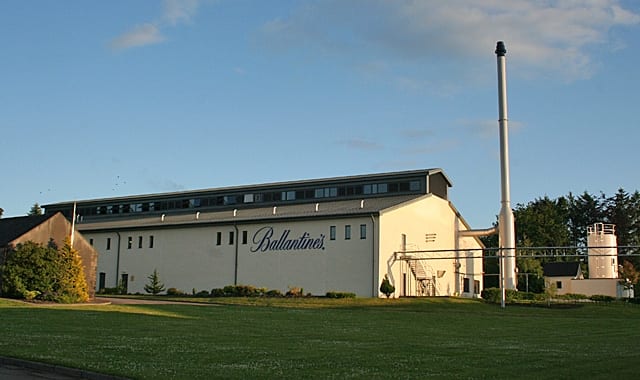
Fraser & Co went bankrupt in 1925, and ownership of the distillery passed to Donald Mustard the receiver (a lawyer) also from Elgin. By 1927, the distillery was silent, and it was purchased by James & George Stodart Ltd. They in turn were acquired by Hiram Walker & Sons (Scotland) Ltd in 1930. The Glenburgie distillery ownership is transfered to Hiram Walker in 1936, and it resumed production the same year. In the 1950s, the malting floor is closed. In 1958, two so-called Lomond Stills (cylindrical stills with a vertically mounted water jacket above it. Within the still neck there are three perforated plates that can be cooled independently. This allows the distiller to produce different types of whisky. Lomond stills have only been used in a handfull of distilleries, including Loch Lomond, Miltonduff, Inverleven and Scapa. In 2010 Bruichladdich installed the still salvaged from the Inverleven distillery).
By means of these Lomond stills, it was possible to produce an entirely different whisky at Glenburgie, and this was sold under the name Glencraig (or Glen Craig), named after Willie Craig, a former director at Hiram Walker. In order to ensure two different products, additional equipment had to be installed in order for the two spirits not to end up mixed together. This, Glenburgie had an extra pair of spirit safes as well as spirit receivers for Glencraig whisky. However, the Lomond stills were removed again in 1981, and replaced with traditional pot stills, thus marking the end of Glencraig whisky.
In 1987, Allied Lyons buys up Hiram Walker & Sons. In 1994, they also buy Pedro Domecq, and the distillery then is operated through Allied Domecq PLC/Allied distillers, who release a 15 Year Old in 2002. In 2000 the distillery was closed, and between 2003 and 2004, the distillery was rebuilt and fitted with new equipment. Pretty much the only unchanged equipment are the stills. In 2005 Allied Domecq is acquired by Pernod Ricard, who have run it through their subsidiary Chivas Brothers since. In 2006, 2 additional stills are installed to make a total of 6, bringing the total capacity to 4,200,000 liters annually.
Glenburgie Whiskies
Most of the whisky produced at Glenburgie is used in blends (particularly Ballantines and Old Smuggler). There have only been a handful of official bottles released in the last 25 years. However,m there are regular releases by independent bottlers.
Distillery info:
Detail |
Information |
|---|---|
| Name | Glenburgie |
| Region | Speyside |
| Country | Scotland |
| Logo | |
| Status | Active |
| Founded | 1829 |
| Water source | Srpings from the Burgie hill |
| Malting floor | No |
| Owned by | Pernod Ricard |
| Address |
Glenburgie distillery +44 (0) 1343 850258 |
| Visitor centre | No |
| Website | http://glenburgie.com/ |
| Map |
Distillery Setup:
Component |
Capacity |
Quantity |
|---|---|---|
| Mash tun | 4.7 tonnes | 1 |
| Washback | 23,500 litres | 13 (6 Scottish Oak, 7 Stainless Steel) |
| Wash still | 11,750 litres | 3 |
| Spirit Still | 15,000 litres | 3 |
| Expected yearly output in LPA (Litres of pure alcohol) | 4,200,000 |
Frequently Asked Questions
Glenburgie was founded in 1810 by William Paul under the name Kilnflat, near Alves in Moray, in the Speyside region. Production didn’t actually begin until 1829, which is also when the first documented evidence of distillation at the site appears. The distillery closed in 1870 due to financial trouble, was renamed Glenburgy in 1871, and was revived in 1878 by Charles Kay under the name Glenburgie-Glenlivet.
Alexander Fraser & Co of nearby Elgin took over the distillery in 1884, but went bankrupt in 1925, passing ownership to receiver Donald Mustard. By 1927 the distillery was silent, and it was bought by James & George Stodart Ltd, who were acquired by Hiram Walker & Sons (Scotland) Ltd in 1930. Ownership formally transferred to Hiram Walker in 1936, and production resumed that same year.
In 1958, Glenburgie installed two Lomond stills, cylindrical stills with a vertically mounted water jacket and three independently coolable perforated plates inside the neck, allowing a distiller to produce different styles of whisky from the same still. Lomond stills have only been used at a handful of distilleries, including Loch Lomond, Miltonduff, Inverleven and Scapa; in 2010, Bruichladdich installed the still salvaged from Inverleven.
Using its Lomond stills, Glenburgie was able to produce an entirely different whisky, sold under the name Glencraig, named after Willie Craig, a former director at Hiram Walker. Extra equipment, including a second pair of spirit safes and separate spirit receivers, was installed to keep the two spirits from mixing. The Lomond stills were removed again in 1981 and replaced with traditional pot stills, ending Glencraig production.
Allied Lyons bought Hiram Walker & Sons in 1987, and Pedro Domecq in 1994, running Glenburgie through Allied Domecq PLC / Allied Distillers, who released a 15 Year Old in 2002. The distillery closed in 2000 and was rebuilt with new equipment between 2003 and 2004, with the stills being pretty much the only equipment left unchanged. Pernod Ricard acquired Allied Domecq in 2005 and has run Glenburgie through its Chivas Brothers subsidiary ever since. Two additional stills were installed in 2006, bringing the total to six and raising annual capacity to 4,200,000 litres.
Most of the whisky produced at Glenburgie goes into blends, particularly Ballantine’s and Old Smuggler. Only a handful of official bottlings have been released in the last 25 years, though independent bottlers release Glenburgie on a fairly regular basis.
No, Glenburgie does not have a visitor centre.