Glen Scotia distillery information
In the town (and whisky region) of Campbeltown, we find the Glen Scotia distillery. Founded in 1832, by Stewart & Galbraith, and Co, the distillery stayed in their hands for almost 60 years, when it was sold to Duncan MacCallum in 1891. In 1919, ownership transferred to Western Highland Distilleries Ltd in 1919. In 1924 following bankruptcy of the company, it was purchased again by MacCallum. Under his guidance, the distillery added their own malting floor, and underwent some modernization construction. In 1928, the distillery was forced to close, most likely due to MacCallum finding himself in financial trouble. Seeing a substantial sum of his money gone due to a business deal gone wrong, he eventually drowned himself in the Crosshill Loch, an artificial lake created to provide water to the distillery. His ghost is claimed to still roam around the distillery.
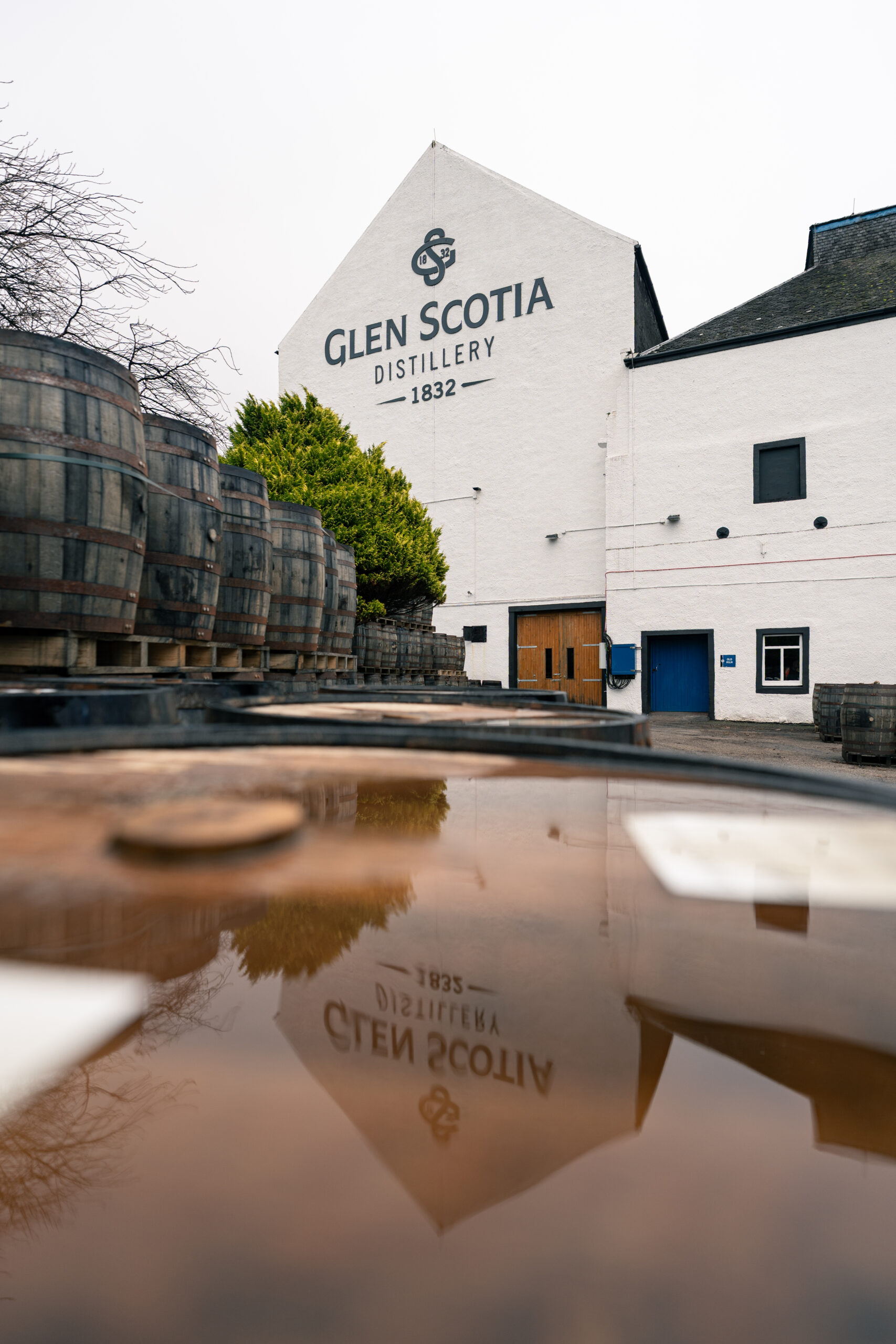
MacCallums estate trustees sold the distillery to Bloch Brothers (Distillers) Ltd, a blending company from Glasgow, who had some success with the distillery, though during the Second World War, were forced to close the distillery due to regulations. In 1954, Bloch Brothers was acquired by Hiram Walker. Glen Scotia continued to switch hands in the last half 20th century, and closed again in 1984, and 1994. In 1996, it was put up for sale once more and purchased by Loch Lomond Distillery Co. Production has been stable since then.
Glen Scotia was probably the last distillery using Corton steel washbacks. These have since been replaced with new stainless steel ones.
In 2024, Glen Scotia replaced its mash tun with a new rack and pinion design, a faithful replica of the cast iron mash tun the distillery ran for the previous 120 years. The rack and pinion mechanism is a nod to the distillery’s Victorian-era engineering, and its return keeps that piece of Glen Scotia’s [Campbeltown](internal link to Campbeltown hub) heritage alive even as the equipment itself has been modernised.
Glen Scotia whiskies
- Double Cask (46% ABV) – The entry point to the range. Matured in first-fill bourbon barrels, finished for 12 months in Pedro Ximénez sherry casks.
- 15 Year Old (46% ABV) – Bourbon-cask matured, widely regarded as the heart of the range.
- Victoriana (54.2% ABV, cask strength, non-chill-filtered) – A tribute to the Campbeltown “boom era,” when the town was known as the Whisky Capital of the World. A portion of peat in the recipe recreates the smoky-tar character associated with whiskies from that period. Parcels are vatted from 70% heavily charred casks (replicating the flavour once imparted by direct-fired stills) and 30% PX sherry casks, each matured for a minimum of one year before blending. No age statement is used, as the focus is on flavour profile rather than age.
- 18 Year Old (46% ABV) – Matured around 17 years in refill bourbon casks and refill American oak hogsheads, then finished for 12 months in first-fill Oloroso sherry casks.
- 25 Year Old (48.8% ABV) – Matured in American oak (bourbon-conditioned) barrels, married in first-fill bourbon casks before bottling;.
Distillery info:
Detail |
Information |
|---|---|
| Name | Glen Scotia |
| Region | Campbeltown |
| Country | Scotland |
| Logo |  |
| Status | Active |
| Founded | 1832 |
| Water source | Crosshill Loch |
| Malting floor | No |
| Owned by | Loch Lomond Distilleries Co. |
| Address |
Glen Scotia Distillery +44 (0) 1586 552288 |
| Visitor centre | No |
| Website | https://www.glenscotia.com |
| Map |
Distillery Setup:
Component |
Capacity |
Quantity |
|---|---|---|
| Mash tun | 2.8 tonnes | 1 (Rack and pinion) |
| Washback | 25,000 litres | 10 (stainless steel) |
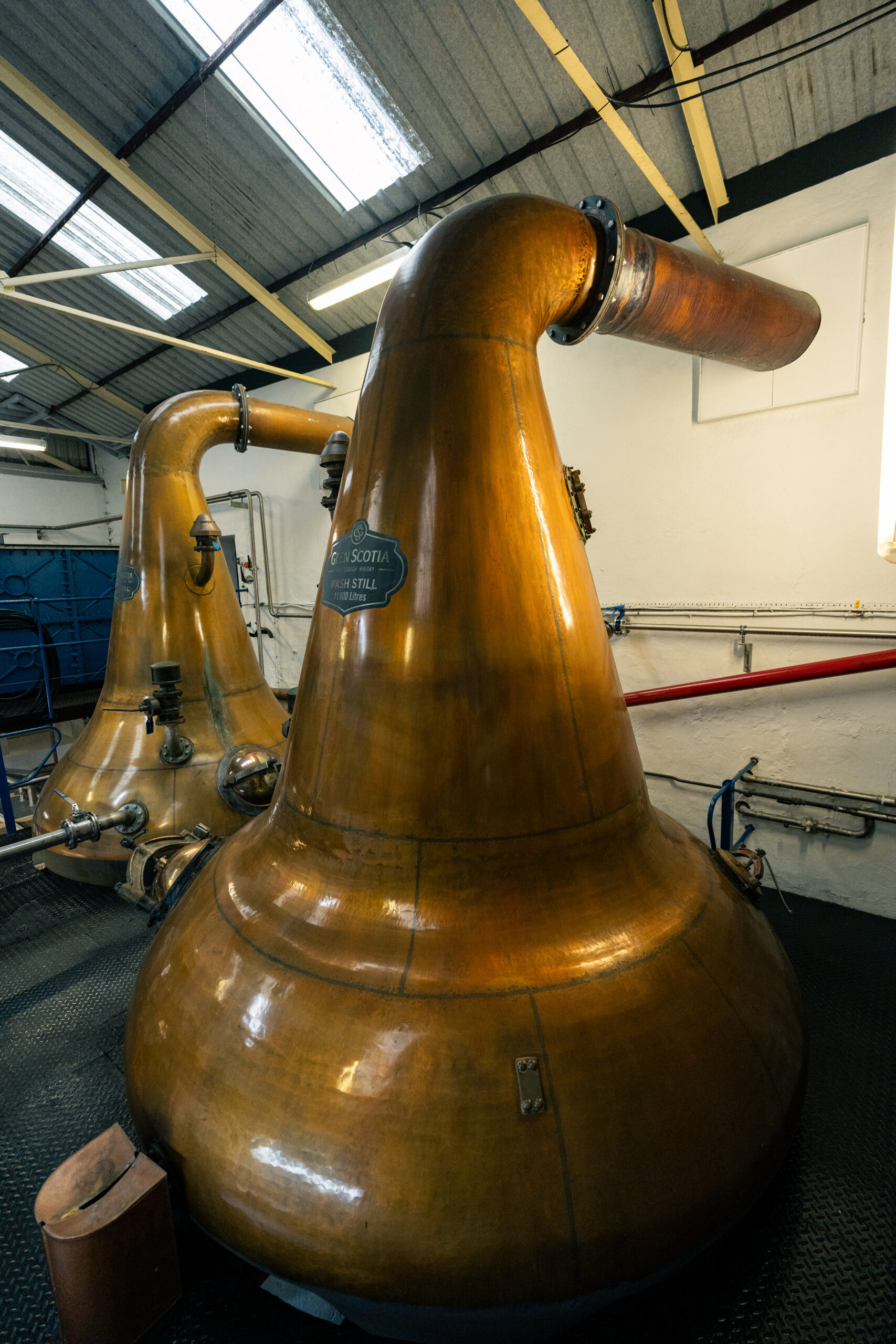
| Wash still | 11,800 litres | 1 |
| Spirit Still | 8,600 litres | 1 |
| Expected yearly output in LPA (Litres of pure alcohol) | 150,000 |
Images courtesy of Glen Scotia.
Frequently Asked Questions
Glen Scotia was founded in 1832 by Stewart & Galbraith and Co in Campbeltown. It stayed in their hands for almost 60 years before being sold to Duncan MacCallum in 1891.
It’s a well-known local legend rather than a verified fact. Duncan MacCallum bought the distillery back in 1924 after a spell under Western Highland Distilleries Ltd ended in bankruptcy, and modernised it with its own malting floor. The distillery was forced to close in 1928, likely after MacCallum found himself in serious financial trouble following a business deal gone wrong. He is said to have drowned himself in Crosshill Loch, the artificial lake built to supply the distillery’s water, and his ghost is claimed to still roam the site.
MacCallum’s estate trustees sold the distillery to Bloch Brothers (Distillers) Ltd, a Glasgow blending company, who found some success with it before being forced to close during the Second World War due to wartime regulations. Bloch Brothers was acquired by Hiram Walker in 1954, and the distillery continued changing hands through the rest of the 20th century, closing again in 1984 and 1994. It was bought in 1996 by Loch Lomond Distillery Co., and production has been stable ever since.
Glen Scotia was likely the last distillery in Scotland still using Corten steel washbacks, which have since been replaced with new stainless steel ones.
In 2024, Glen Scotia replaced its mash tun with a new rack and pinion design, a faithful replica of the cast iron mash tun the distillery had run for the previous 120 years. The rack and pinion mechanism nods to the distillery’s Victorian-era engineering, keeping that piece of its Campbeltown heritage alive even as the equipment itself has been modernised.
Victoriana is a tribute to Campbeltown’s “boom era”, when the town was known as the Whisky Capital of the World. A portion of peat in the recipe recreates the smoky-tar character associated with whiskies from that period, with parcels vatted from 70% heavily charred casks, replicating the flavour once imparted by direct-fired stills, and 30% PX sherry casks, each matured for at least a year before blending. No age statement is used, since the focus is on flavour profile rather than age.
The core range includes Double Cask (46% ABV), the entry point, matured in first-fill bourbon barrels and finished for 12 months in Pedro Ximenez sherry casks; a 15 Year Old (46% ABV), bourbon-cask matured and widely regarded as the heart of the range; an 18 Year Old (46% ABV), matured around 17 years in refill bourbon casks and refill American oak hogsheads before a 12-month finish in first-fill Oloroso sherry casks; and a 25 Year Old (48.8% ABV), matured in bourbon-conditioned American oak barrels and married in first-fill bourbon casks before bottling.
No, Glen Scotia does not have a visitor centre.