Glenglassaugh distillery information
The Glenglassaugh distillery was founded in 1875 just outside the coastal town of Portsoy on the Banffshire coast in the Highlands by the Glenglassaugh Distillery Company (James Moir, Thomas Wilson, and Alexander and William Morrison (Moir’s nephews)) on land known as “Craig’s Mills”. The ocation was chosen for its access to clean and pure water from the Glassaugh Springs. The owners intended to sell their spirit as single malt, selling off any surplus to blenders including to Robertson & Baxter from Glasgow. Moir passed away in 1887, with Wilson dying not long after. The distillery was refurbished and equipped with a new stills and washbacks. In 1892, William Morrison also passed, and his brother Alexander was forced to sell the distillery.
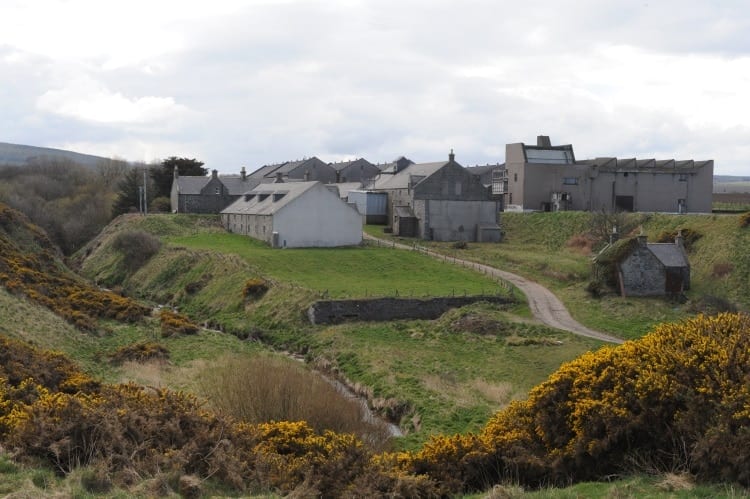
It was purchased by Robertson & Baxter who sold it on to their sister company Highland Distilleries Co. Ltd. shortly after. After 1898, demand for Glenglassaugh (and whisky in general) started dropping, leading to the distillery being closed in 1907. Malting continued at the site, until 1922. It remained closed until 1931, then briefly operated for a few years, and was closed again in 1936. It remained closed until 1959, when it was rebuilt with larger new stills replacing the old pair. Glenglassaugh was reopened by Highland Distilleries in 1960. During the next few decades, most of the whisky distilled made its way into blends, particularly Cutty Shark and The Famous Grouse.
In the early 1980s, another crisis struck, and the distillery was mothballed in 1986. In 1989, some new bottlings were released, but the distillery remained closed. Highland Distilleries was bought by the Edrington Group (who own Famous Grouse, The MacAllan, Highland Park and Glenrothes), who used the warehouses on the site, but decided not to restart the distillery. Things changed in 2008, when a Dutch investment group called the Scaent group bought Glenglassaugh, started reconstruction of the distillery. Staff was hired, and in November 2008, the distillery was officially reopened by Scotland’s First Minister Alex Salmond.
In 2013, the Benriach Distillery Company (owners of Benriach and Glendronach) bought Glenglassaugh from Scaent.
Glenglassaugh Whiskies
In 2005, The Edrington Group released one bottling:
- 22 Years Old (released in 2005)
After Scaent took over, several bottlings found their way to the market:
- 21 Years Old (released in 2008)
- Aged over 30 Years (released in 2008)
- Aged over 40 Years (released in 2008)
- Fledgling XB (released in 2010)
- Peated (released in 2010)
- 26 Years Old (replaced the 21 Years Old. Released in 2010)
- Glenglassaugh Revivial
Currently, the following expressions are available:
- Revival (first released in 2012); matured in ex-red wine and fresh Bourbon casks
- Evolution; matured in ex-Tennessee first-fill whisky barrels
- Torfa; a peated expression
- 30 Years Old (first released in 2013)
- 40 Years Old (first released in 2013)
There have also been Rare Cask Releases:
- 1968 cask #1601; 45 Years Old. Finished in a Sherry Hogshead
- 1972 cask #2114; 41 Years Old. Matured in a Sherry butt
- 1973 cask #6801; 40 Years Old. Finished in a Manzanilla Sherry Puncheaon
- 1975 cask #7301; 38 Years Old. Finished in an Oloroso Sherry Hogshead
- 1975, cask #7801; 38 Years Old. Finished in a Mopscatel Hogshead
- 1978 cask #1803; 35 Years Old. Finished in a Sherry Hogshead
- 1987 cask #1810; 35 Years Old. Finished in a Port Hogshead
- 1986 cask #2101; 28 Years Old.
Lastly, there are two whiskies released as the Massandra Connection, finished in casks obtained from the Massandra winery in the Crimea:
- Glenglassaugh Massandra Connection 1973 41YO Sherry Finish
- Glenglassaugh Massandra Connection 1978 35YO Madeira Finish
Distillery info:
Detail |
Information |
|---|---|
| Name | Glenglassaugh |
| Region | Speyside |
| Country | Scotland |
| Logo |  |
| Status | Active |
| Founded | 1875 |
| Water source | 2 wells near the Glassaugh Springs |
| Malting floor | No |
| Owned by | Benriach Distillery Company |
| Address |
Glenglassaugh Distillery +44 (0) 01313 355135 |
| Visitor centre | Yes |
| Website | http://www.glenglassaugh.com/ |
| https://twitter.com/glenglassaugh | |
| https://www.facebook.com/GlenglassaughDistillery | |
| Map |
Distillery Setup:
Component |
Capacity |
Quantity |
|---|---|---|
| Mash tun | 5.25 tonnes | 1 (Cast iron) |
| Washback | 25,000 litres | 6 (4 Douglas Fir, 2 Stainless Steel (Not used)) |
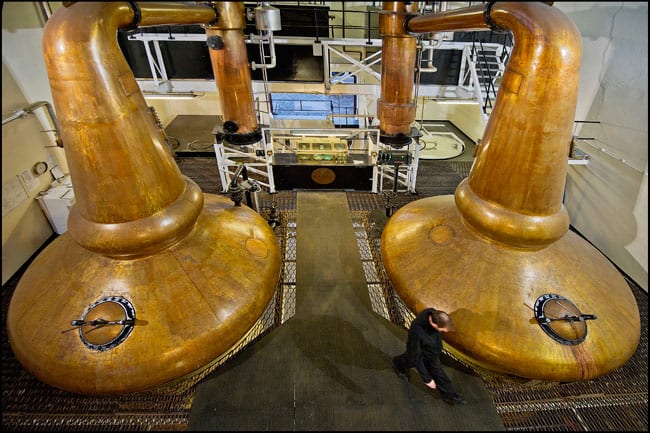
| Wash still | 11,000 litres | 1 |
| Spirit Still | 12,000 litres | 1 |
| Expected yearly output in LPA (Litres of pure alcohol) | 1,100,000 |
Images courtesy of the Glenglassaugh distillery
Frequently Asked Questions
Glenglassaugh is pronounced glen-GLAH-sah. The name is generally translated from Gaelic as “valley of the green grass,” describing the distillery’s setting near the fishing village of Portsoy.
Glenglassaugh was founded in 1875 just outside the coastal town of Portsoy on the Banffshire coast in the Highlands, by the Glenglassaugh Distillery Company: James Moir, Thomas Wilson, and Alexander and William Morrison, Moir’s nephews. The site, known as “Craig’s Mills”, was chosen for its access to clean, pure water from the Glassaugh Springs. The owners intended to sell their spirit as single malt, offloading any surplus to blenders including Robertson & Baxter of Glasgow.
James Moir died in 1887, and Thomas Wilson not long after; the distillery was then refurbished with new stills and washbacks. William Morrison died in 1892, forcing his brother Alexander to sell the distillery. Robertson & Baxter bought it and soon sold it on to their sister company, Highland Distilleries Co. Ltd.
Demand for Glenglassaugh, and whisky generally, dropped after 1898, leading to closure in 1907, though malting continued until 1922. The distillery stayed shut until 1931, ran briefly for a few years, then closed again in 1936, remaining silent until 1959, when it was rebuilt with larger new stills. Highland Distilleries reopened it in 1960, and most of its whisky went into blends over the following decades, particularly Cutty Shark and The Famous Grouse. Another crisis in the early 1980s led to mothballing in 1986; some new bottlings were released in 1989, but the distillery itself stayed closed.
Highland Distilleries was bought by the Edrington Group, owners of Famous Grouse, The Macallan, Highland Park and Glenrothes, who used the site’s warehouses but chose not to restart distilling. That changed in 2008, when a Dutch investment group called Scaent bought Glenglassaugh and began reconstruction. Staff were hired, and in November 2008 the distillery was officially reopened by Scotland’s First Minister Alex Salmond.
In 2013, the Benriach Distillery Company, owners of Benriach and Glendronach, bought Glenglassaugh from Scaent.
The current range includes Revival, first released in 2012 and matured in ex-red wine and fresh Bourbon casks; Evolution, matured in ex-Tennessee first-fill whisky barrels; Torfa, a peated expression; and 30 and 40 Year Old expressions, both first released in 2013. Earlier bottlings under Scaent included 21, 26, 30 and 40 Year Old releases, Fledgling XB, and a Peated expression, following a single 22 Year Old release put out by the Edrington Group in 2005.
Glenglassaugh has released a series of Rare Cask bottlings drawn from individual casks dating back to 1968, finished in a range of Sherry, Port and Manzanilla casks and typically aged between 28 and 45 years. Separately, two whiskies have been released as the Massandra Connection, finished in casks sourced from the Massandra winery in Crimea: a 1973 vintage with a 41-year-old Sherry finish, and a 1978 vintage with a 35-year-old Madeira finish.
Yes, Glenglassaugh has a visitor centre.