
A worm tub is one of the two traditional methods used to condense spirit vapour back into liquid after it leaves the still, the other being the more modern shell-and-tube condenser. It consists of a long coil of copper piping, known as the worm, submerged in a large tub or tank of cold water. As hot vapour travels from the still’s lyne arm into the coil, it cools gradually along the pipe’s length and condenses back into liquid new make spirit by the time it reaches the far end.
The design has been in use since long before modern condensing methods existed, and it sits at the very end of the process that begins in the mash tun and continues through the washback, before the wash or spirit passes through the still and finally the worm.
How a Worm Tub Works
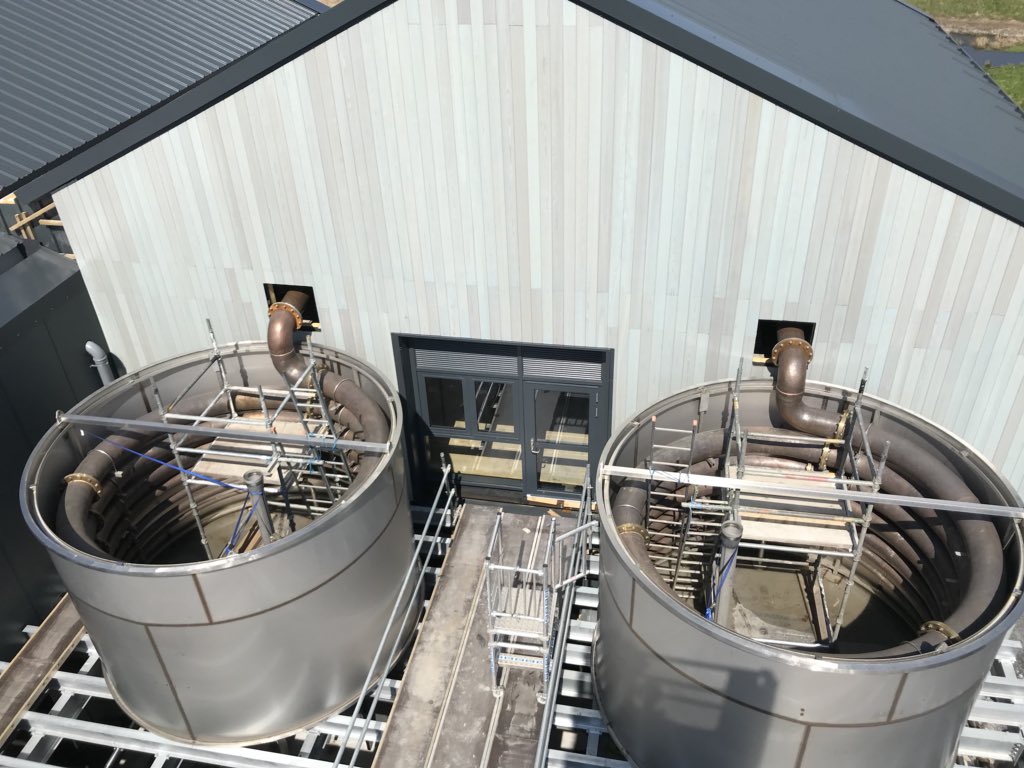
The worm itself is a coiled copper pipe that can run to around 100 metres in length, with a number of joints along its run. It sits inside a tub filled with cold water, traditionally drawn from a nearby burn or loch and continuously replenished to keep the water cool. As alcohol vapour enters the coil from the still, it loses heat steadily as it winds through the water-filled tub, condensing gradually rather than all at once.
This is a slower and gentler process than condensing through a shell-and-tube unit, and it keeps the vapour in contact with copper for longer as it travels the length of the coil. The overall surface area of copper the vapour touches is still considerably smaller than in a shell-and-tube condenser, and that difference in total copper contact is what gives worm tub spirit its distinct character.
Worm Tub vs Shell-and-Tube Condensers
Shell-and-tube condensers, which use pressurised cold water passing around a bundle of copper tubes to condense vapour almost immediately, were introduced to the industry in the 18th century and became the standard choice through the 20th century for their compactness, lower maintenance, and higher efficiency. They also bring the vapour into much greater contact with copper.
Copper reacts with sulphur compounds produced during fermentation and distillation, stripping them out of the spirit as it passes through. A shell-and-tube condenser’s greater copper contact removes more of these compounds, producing a lighter, cleaner new make spirit. A worm tub’s more limited copper contact leaves more sulphur compounds in place, producing a heavier, more savoury spirit with meatier, sometimes described as “meaty” or “vegetable,” notes.
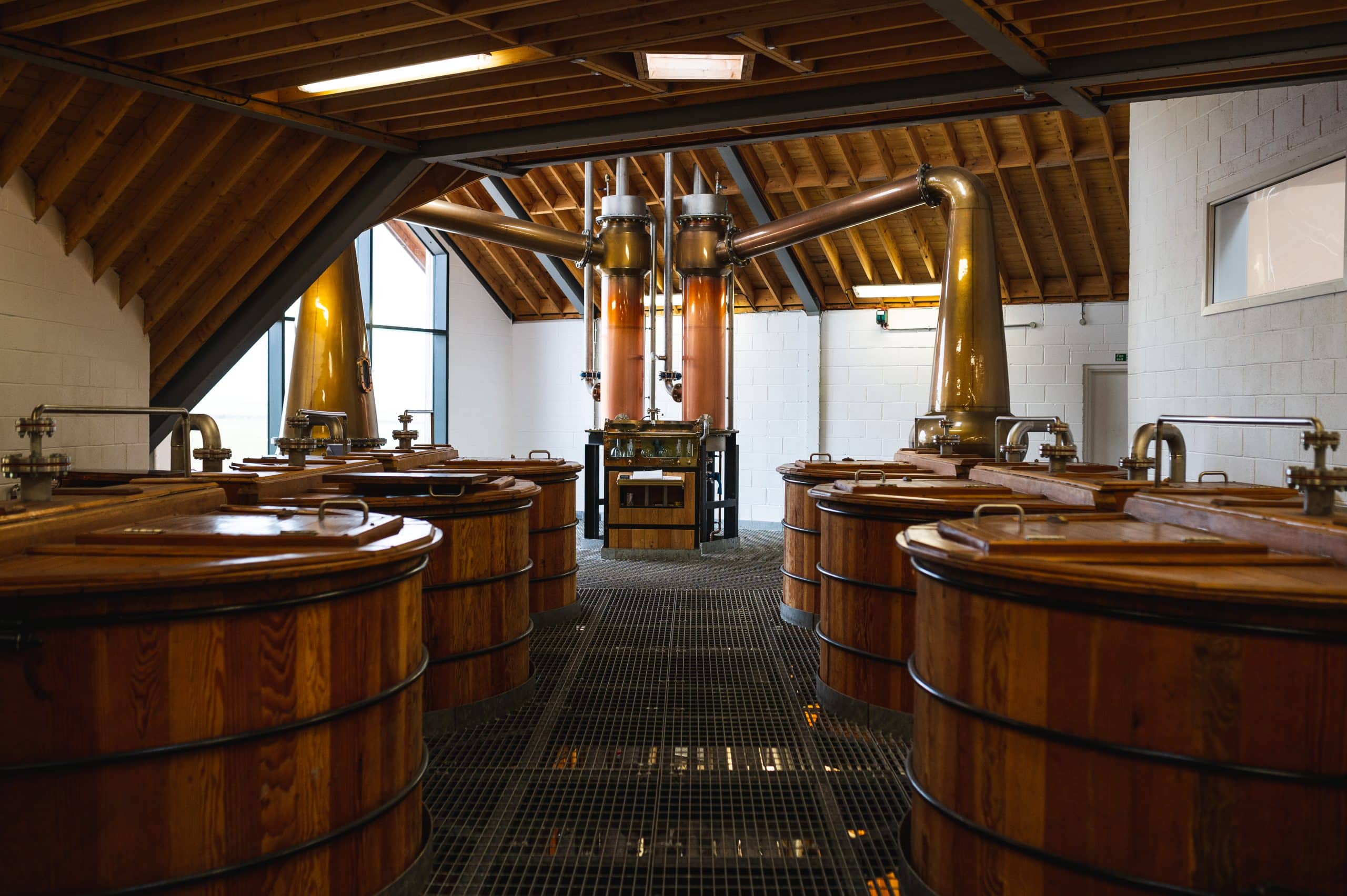
The image from the Lochlea stillroom below shows the shell-and-tube condensers in the middle of the image, connected to the stills by means of the Lyne Arm.
Distilleries that have kept their worm tubs, or in a few cases reinstated them, have generally done so deliberately, because switching to shell-and-tube condensing was found to change the character of the spirit more than they wanted. Dalwhinnie is the best documented example: after trialling shell-and-tube condensers, the distillery returned to wooden worm tubs to restore its original spirit character.
What Worm Tubs Are Made From
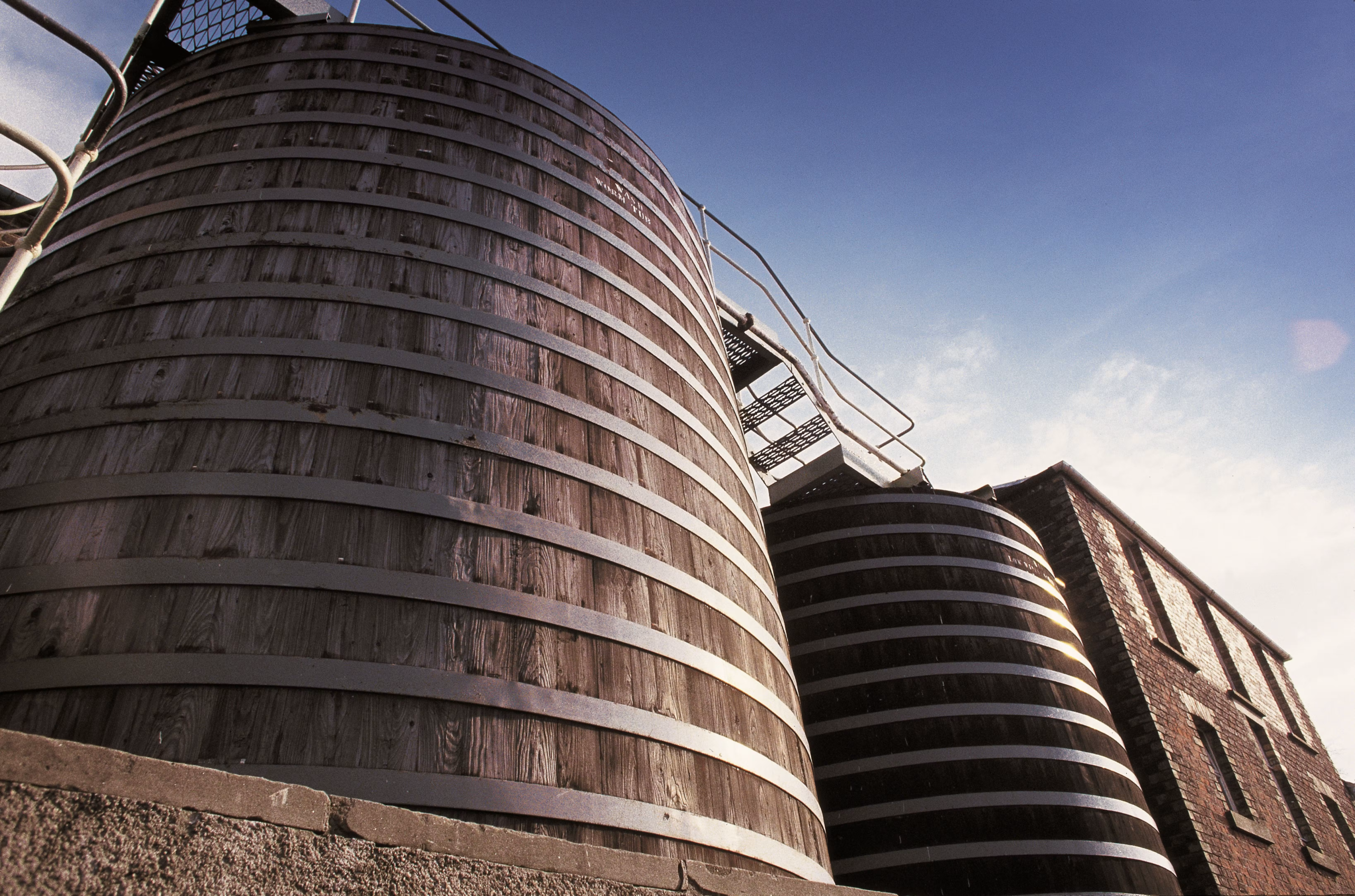
The coil itself is almost always copper, since it’s the copper contact that shapes the spirit’s character, but the outer tub that holds the cooling water varies between distilleries. Some, including Edradour, Mortlach and Glen Elgin, use wooden tubs. Others use cast iron, as at Royal Lochnagar, or stainless steel, as at Oban and Old Pulteney.
A small number of distilleries have gone further and replaced the copper worm itself. Cragganmore moved from copper to stainless steel worms in 2022, and Craigellachie fitted stainless steel tubs in 2014 while keeping its original copper worms. These changes affect maintenance and durability rather than the underlying worm tub design.
Which Distilleries Still Use Worm Tubs
Worm tubs are less common than they once were, but a meaningful number of working distilleries across Scotland still rely on them, in several cases specifically because they don’t want to give up the character the tubs produce.
Highland: Dalwhinnie and Oban both use worm tubs on their stills. Royal Lochnagar uses cast iron tubs, while Edradour runs two wooden worm tubs with copper coils. anCnoc, from Knockdhu distillery, and Old Pulteney also condense through worm tubs. Brora reopened in 2021 with its original copper stills refurbished and returned to use, and trade sources describe worm tubs recreated from archive information as part of that rebuild.
Speyside: Craigellachie and Mortlach both use worm tubs across their stills, as does Benrinnes. Glen Elgin connects all six of its stills to traditional wooden worm tubs, and Speyburn runs a hybrid setup, with a shell-and-tube condenser on its wash still and worm tubs on its spirit stills. Balmenach also uses worm tubs, and Cragganmore continues to use worm tub condensing, now with stainless steel worms in place of the original copper.
Lowland: Glenkinchie kept its traditional worm tubs through refurbishment. Rosebank restarted production in July 2023 after 30 years closed, and the rebuild preserved its signature triple distillation alongside worm tub condensers, long credited for its light, floral style.
Islay: Ardnahoe, one of Islay’s newer distilleries, chose worm tubs deliberately when it was built, in keeping with its traditional approach.
Campbeltown: Springbank condenses its first spirit still run through a worm tub as part of its production.
Island: Talisker connects all five of its stills, two wash and three spirit, to worm tubs.
Frequently Asked Questions
A worm tub condenses alcohol vapour coming from the still back into liquid spirit. The vapour travels through a coiled copper pipe submerged in a tub of cold water, cooling gradually until it condenses.
A worm tub cools vapour slowly as it winds through a coil submerged in a static tub of water, with limited copper contact. A shell-and-tube condenser uses pressurised water around a bundle of copper tubes to condense vapour quickly, with much greater copper contact.
Because the vapour has less contact with copper, more sulphur compounds remain in the new make spirit. This produces a heavier, more savoury spirit, often described as meaty or vegetal, compared with the lighter, cleaner spirit that comes from a shell-and-tube condenser.
The coil is almost always copper. The outer tub varies by distillery and can be made from wood, cast iron, or stainless steel. A small number of distilleries, such as Cragganmore, have also replaced their copper worms with stainless steel.
Worm tubs are less efficient and more demanding to maintain than shell-and-tube condensers, but several distilleries have kept or reinstated them because switching away was found to change their spirit’s character more than they wanted.
Distilleries still using worm tubs include Talisker, Dalwhinnie, Oban, Royal Lochnagar, Edradour, anCnoc, Old Pulteney, Craigellachie, Mortlach, Benrinnes, Glen Elgin, Speyburn, Balmenach, Cragganmore, Glenkinchie, Ardnahoe, Springbank, Brora, and Rosebank.