
Strathearn Distillery Information
Set on a farm steading in Perthshire, in the Southern Highlands whisky sub-region, Strathearn is one of Scotland’s smaller craft distilleries. The idea began around 2010, when three friends, Tony Reeman-Clark, David Lang and David Wight, set out to build a distillery of their own. Planning permission came through in February 2013, and the stills were ordered soon after.
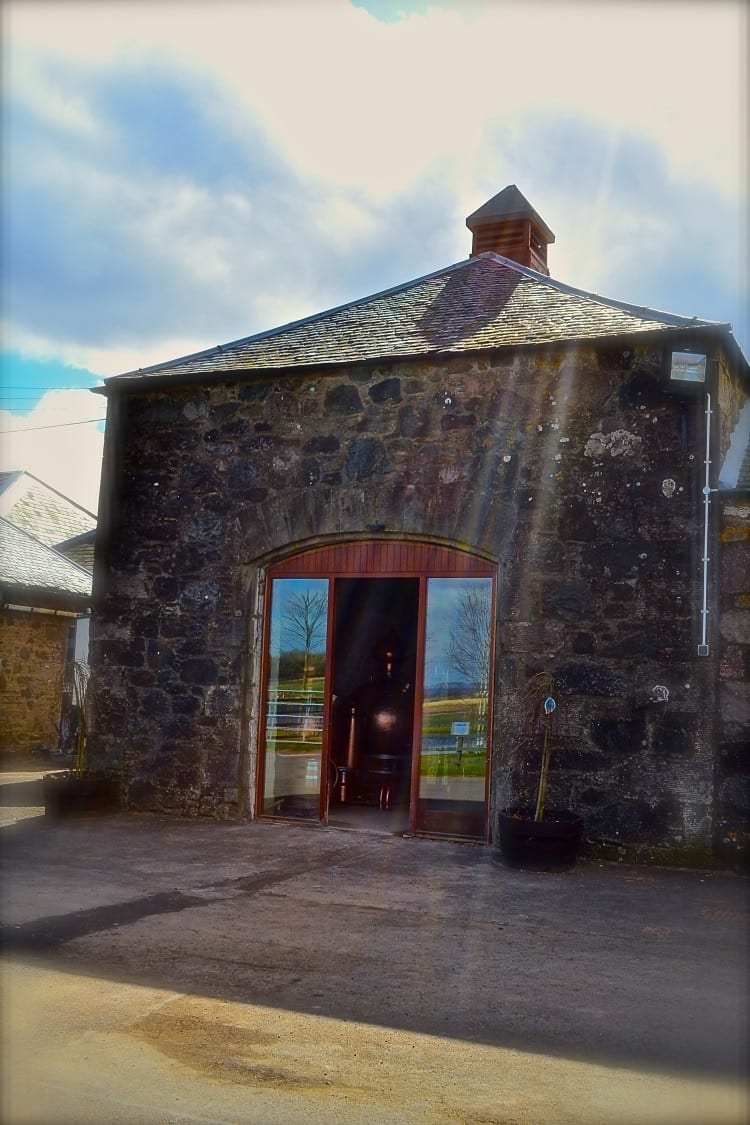
The distilling license was granted on 22 August 2013, and the first cask was filled on 18 October that same year. Most of Strathearn’s whisky matures in octave casks, much smaller than the casks used at most Scottish distilleries. These octave casks hold 50 litres, enough for roughly 70 bottles (for comparison, a traditional Sherry butt holds about 500 litres, or 700 bottles, and a Bourbon barrel about 180 litres, or 250 bottles).
Because the casks are so small, the angel’s share takes a noticeably bigger bite of the contents over time: at a rough 5% loss in the first year and 2% a year after that, a 5-year-old cask would be down to around 43 litres, a 10-year-old to around 39.6 litres, and a 15-year-old to around 35.8 litres. Casks are typically finished in Port or Sherry wood, though other finishes are available on request.
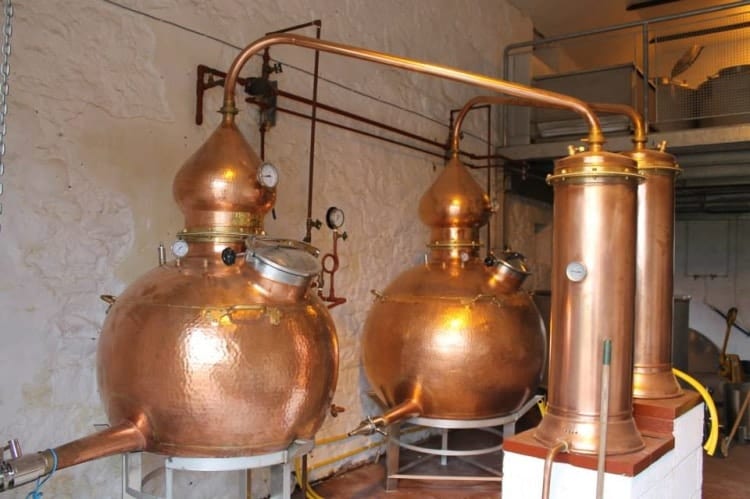
Strathearn’s stills are unconventional Hoga alembic stills, made in Portugal and more commonly used for Calvados, Cognac or Pisco. The distillery chose them over traditional Scottish pot stills largely on cost, and fitted them with taller heads than usual to increase reflux (where alcohol vapors fall back into the liquid at the bottom of the still), aiming for a smoother spirit.
Running a distillery this size is expensive, so Strathearn also produces gin, which can be sold while the whisky matures in cask.
In October 2019, founder Tony Reeman-Clark sold the distillery outright to independent bottler Douglas Laing & Co. The Whisky Garden Ltd, the company Reeman-Clark’s fellow director had been running things under, kept the non-Scotch side of the business (Strathearn’s gin and rum brands), while Douglas Laing took over the whisky-making operation and has since invested in new stills, boilers, a mash tun and fermenters to grow capacity. Strathearn remains part of the Highland whisky region, in its southern reaches near Perth.
Strathearn Whiskies
- Strathearn 3 Year Old (2016): the distillery’s first release, matured in 50-litre octave casks, bottled in a very limited run and sold at auction rather than through retail.
- Strathearn Inaugural Release (2024): the first single malt bottled under Douglas Laing’s ownership, a vatting of 32 casks including ex-bourbon, virgin oak and ex-sherry wood, no age statement (minimum five years old), bottled at 50% ABV.
- Strathearn Single Malt Batch 02 (2025): built on the same cask recipe as the Inaugural Release with a reduced proportion of virgin oak, blending inherited stock with spirit distilled under Douglas Laing’s ownership, bottled at 50% ABV.
- Strathearn Single Malt Batch 03: the current release in the ongoing batch series, sold alongside Batch 02 through Douglas Laing’s own shop.
The distillery also continues to produce gin (including Strathearn Scottish Gin and Strathearn Heather Rose Gin) and, more recently, a Teasmith gin made with Sri Lankan tea leaves, though these sit under The Whisky Garden’s separate non-Scotch brand rather than the distillery’s whisky range.
Distillery info:
Detail |
Information |
|---|---|
| Name | Strathearn |
| Region | Highland |
| Country | Scotland |
| Logo |  |
| Status | Active |
| Founded | 2013 |
| Water source | Loch Turret |
| Malting floor | No |
| Owned by | Douglas Laing & Co. |
| Address |
Strathearn Distillery |
| Visitor centre | No |
| Website | https://www.strathearndistillery.com/ |
| https://www.facebook.com/bigpeat | |
| https://www.instagram.com/bigpeatwhisky/ | |
| Map |
Distillery Setup:
Component |
Capacity |
Quantity |
|---|---|---|
| Mash tun | 0.4 tonnes | 1 |
| Washback | 2,000 litres | 8 |
| Wash still | 1,000 litres | 2 |
| Spirit Still | 500 litres | 1 |
| Expected yearly output in LPA (Litres of pure alcohol) | 140,000 |
Frequently Asked Questions
Strathearn doesn’t have a visitor centre, so its own website and social channels, and Douglas Laing’s shop, are the main routes to a bottle. Earlier releases were sold from single casks, letting customers request a preferred cask origin; current batches are vatted releases sold through Douglas Laing.
Three friends, Tony Reeman-Clark, David Lang and David Wight, began developing the idea around 2010. Planning permission followed in February 2013, the distilling license was granted on 22 August 2013, and the first cask was filled a few weeks later, on 18 October 2013.
It’s a small-scale operation on a farm in Perthshire, and instead of traditional Scottish pot stills, it uses unconventional Hoga alembic stills made in Portugal, more typically used for Calvados, Cognac or Pisco. They were chosen partly for cost, with taller heads fitted to improve reflux and help produce a smoother spirit.
Octave casks are small casks holding just 50 litres, enough for about 70 bottles, compared with roughly 500 litres (700 bottles) for a traditional Sherry butt or 180 litres (250 bottles) for a Bourbon barrel. Strathearn typically finishes these in Port or Sherry wood, though other cask types are available on request.
Running a small distillery is expensive, so Strathearn also produces gin, which can be sold while its whisky matures in cask.
No. Strathearn does not currently offer a visitor centre or public tours.
Douglas Laing & Co, the independent Scotch whisky bottler, bought Strathearn outright in October 2019 from founder Tony Reeman-Clark. The Whisky Garden Ltd, previously the distillery’s operating company, kept only the non-Scotch gin and rum brands.