
Glenfarclas distillery information
Originally established as a farm distillery in Ballindalloch in the Speyside whisky region under the name of Rechlerich by George Hay in 1836. In 1865, the distillery was bought by the Grant family, who let the daily operations to John Smith. Smith went on to build Cragganmore, and left in 1870. The distillery was from then on managed by J & G Grant. In 1889, John Grant passed away, leaving the distillery to his son George. However, a year later, George died as well, and the distillery was left to his widow and two eldest sons. The sons wanted to expand the distillery, and decided to partner up with the Pattison Brothers in 1895, when The Glenfarclas-Glenlivit Distillery Co. Ltd was formed. The shares of that company were evenly split between Pattison, Elder & Co and the Grant family.
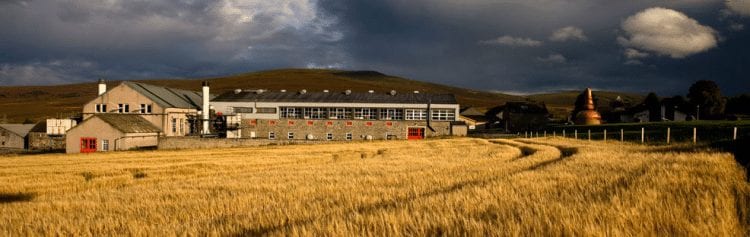
In 1896, the distillery was completely rebuilt. Two years later, Pattison, Elder & Co. went bankrupt in what would be called the Pattison crash. The Grant family used the bankruptcy to resume complete control of the distillery, and in 1900 changed the ownership to J. & G. Grant.
Renovation
Things were quiet for Glenfarclas from then on, and the quiet lasted until 1960, when the amount of stills was extended from 2 to 4. In 1972, the stills were switched to direct gas heating. A year later, Glenfarclas was one of the first distilleries to establish a visitor centre. In 1967, 2 additional stills were added. In 1980, one of the wash stills was switched from direct gas firing to indirect steam heating. However, the quality of the spirit produced in this manner was deemed to be too low, and the still was converted back to gas firing, with the produce finding its way into blends.
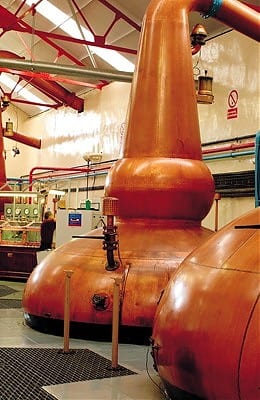
Today, Glenfarclas is the last distillery to use direct heating for all of their stills. Most other distilleries switched to indirect heating, and while Springbank has 1 directly heated still left, Glenfarclas trumps that with their 6 stills. The distillery is still run by the Grant family. In fact, the current owners and proprietors are the sixth generation of grants to do so.
Glenfarclas Whiskies
The whisky produced at Glenfarclas is matured exclusively in ex-Sherry oak casks.
There’s an impressive range available:
- 10 Years Old
- 12 Years Old
- 15 Years Old
- 17 Years Old
- 18 Years Old
- 21 Years Old
- 25 Years Old
- 30 Years Old
- 40 Years Old
- 105 Cask Strentgh
Additionally, there’s the Family Casks, which is bottled from a collection of single casks from the warehouses. Launched in 2007, the range initially was comprised of 43 Single Cask bottlings. 7 new casks have been launched since; 6 to replace casks that sold out, and an addition of 1996. The family casks are all bottled at cask strength.
Distillery info:
Detail |
Information |
|---|---|
| Name | Glenfarclas |
| Region | Speyside |
| Country | Scotland |
| Logo |  |
| Status | Active |
| Founded | 1836 |
| Water source | Ben Rinnes |
| Malting floor | No |
| Owned by | J & G Grant |
| Address |
Glenfarclas Distillery |
| Visitor centre | Yes |
| Website | http://www.glenfarclas.co.uk/ |
| http://twitter.com/glenfarclas | |
| http://www.facebook.com/GlenfarclasHighlandSingleMaltWhisky | |
| Community | Glenfarclas Family |
| Map |
Distillery Setup:
Component |
Capacity |
Quantity |
|---|---|---|
| Mash tun | 16.5 tonnes | 1 (Semi Lauter) |
| Washback | 45,000 litres | 12 (Stainless Steel) |
| Wash still | 29.600 litres | 3 |
| Spirit Still | ? litres | 3 |
| Expected yearly output in LPA (Litres of pure alcohol) | 3,000,000 |
Images courtesy of the GlenFarclas distillery
Frequently Asked Questions
Glenfarclas was originally established as a farm distillery in Ballindalloch, in the Speyside region, under the name Rechlerich, by George Hay in 1836. In 1865, the Grant family bought the distillery and left daily operations to John Smith, who went on to build Cragganmore before leaving Glenfarclas in 1870, after which J & G Grant took over management.
John Grant died in 1889, leaving the distillery to his son George, who died himself just a year later, passing it to his widow and two eldest sons. Wanting to expand, the sons partnered with the Pattison Brothers in 1895 to form The Glenfarclas-Glenlivet Distillery Co. Ltd, with shares split evenly between Pattison, Elder & Co and the Grant family. The distillery was completely rebuilt in 1896, but two years later Pattison, Elder & Co went bankrupt in the Pattison crash, and the Grant family used the opportunity to resume full control, changing ownership to J & G Grant in 1900.
Yes. After a quiet period, the number of stills grew from two to four in 1960 and to six by 1967, with the stills switched to direct gas heating in 1972. In 1980, one wash still was converted to indirect steam heating, but the resulting spirit was judged too low in quality, so it was switched back to gas firing, with that batch’s produce going into blends instead. Today, Glenfarclas is the last distillery to use direct heating across all its stills. Most others switched to indirect heating, and while Springbank has one directly heated still remaining, Glenfarclas runs six.
Glenfarclas is still run by the Grant family, with the current owners and proprietors representing the sixth generation of Grants to do so. In 1973, Glenfarclas also became one of the first distilleries to open a visitor centre.
The whisky produced at Glenfarclas is matured exclusively in ex-sherry oak casks.
The Family Casks range is bottled from a collection of single casks held in the warehouses. Launched in 2007, it initially comprised 43 single-cask bottlings, with seven new casks added since, six to replace sold-out releases and one addition from 1996. All Family Casks releases are bottled at cask strength.
The core range spans a 10, 12, 15, 17, 18, 21, 25, 30 and 40 Year Old, alongside 105 Cask Strength.
Yes, Glenfarclas has a visitor centre.