Knockdhu Distillery Information
Perhpas confusingly, anCnoc whisky is made in the Knockdhu distillery, which can be found in the Highlands of Scotland, on the edge of the Speyside region, in the small village of Knock (which is Gaelic for “Hill”, taking it’s name from a nearby conical hill that dominates the local landscape) in Aberdeenshire. The distillery’s whisky currently is sold under the name of anCnoc, though it also was known as An Cnoc.
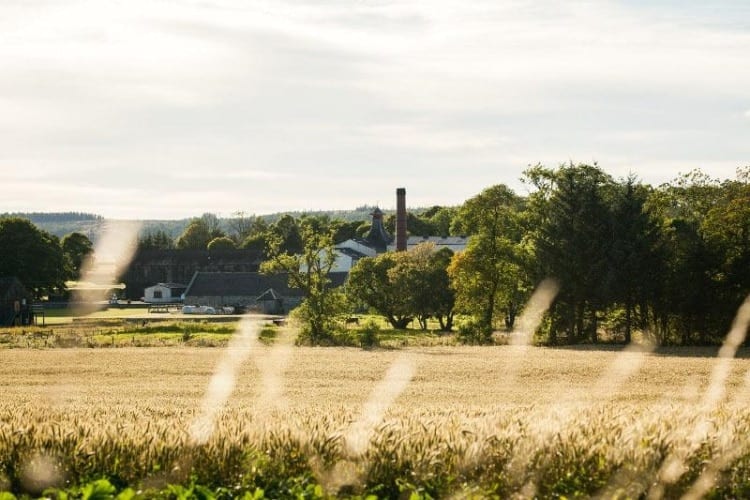
The distillery was founded in 1893 by John Morrison, who purchased land from the Duke of Fife for farming purposes. After discovering several springs containing pure crystal water on the southern slopes of Knock Hill, and realizing there was peat and barley aplenty, as well as a nearby railroad, he realized the potential for producing whisky. Morrison sent water samples off to a laboratory in Edinburgh. The laboratory belonged to Distillers Company Limited (DCL), who confirmed the water was excellent for whisky production, and then offered to purchase the site from Morrison, who accepted. The distillery originally was designed by architects Gordon & Macbey from Elgin. It was constructed using locally sourced gray granite. The first whisky was distilled in October 1894.
In 1924, management was taken over by Distillers Agency. In 1930, production was taken over by Scottish Malt Distillers (S.M.D.). Knockdhu continually produced until 1931, when the global crisis forced it to close its doors. It reopened in 1933, but had to close again between 1940 and 1945, when wartime regulations on barley prevented many distilleries from producing. During this period, the distillery housed soldiers from India. Following the end of the war, production resumed, and continued until 1983, when the distillery closed again. In 1988, Inver House purchase the distillery from United Distillers. and resumed production in February 1989. In 2001, Inver House (Which also owns the Balblair, Balmenach, Old Pulteney and Speyburn distilleries) was bought by Pacific Spirits, who themselves are owned by the largest producer of alcohol in Thailand, Great Oriole Group (also known as ThaiBev).
The whisky was sold under the name KnockDhu, until 1994, when it was renamed to anCnoc in order to avoid confusion with the nearby Knockando distillery.
anCnoc Whiskies
Knockdhu’s stills resemble the same shape and form as the ones originally placed in the distillery when it was founded. They are very flat stills in the bottom, featuring long necks. This helps to ensure AnCnoc remains a light and fresh-tasting spirit. Something that is unique to KnockDhu is that the same wormtub is used to condense the output from both the wash- as well as the spirit still.
The whisky is matured in American and Spanish oak barrels, previously used for Bourbon or Sherry.
The core range consists of:
- 12 Years Old
- 16 Years Old, matured in Bourbon barrels. Non-chill filtered, and natural colored.
- 22 Years Old, matured in a mix of ex-Bourbon and ex-Sherry casks.
- 35 Years Old, bottled at cask strength, non-chill filtered, and natural colored. Limited to 1,495 bottles.
- AnCnoc Travel Retail Exclusive
Peaty range (all are named after tools used in the peat-cutting process):
- Tushkar; 15 ppm (Only available in Sweden).
- Flaughterl 14.8 ppm.
- Rutter; 11 ppm.
Vintage releases:
- 1975; matured in Spanish and American oak barrels.
- 1991
- 1993
- 1994
- 1995
- 1996; matured in Spanish and American oak barrels.
- 1997
- 1998
- 1999
Peter Arkle Series:
- Ingredients
- Casks
- Bricks
- Warehouse
Distillery info:
Detail |
Information |
|---|---|
| Name | anCnoc |
| Region | Highland |
| Country | Scotland |
| Logo |  |
| Status | Active |
| Founded | 1893 |
| Water source | Knock Hill Springs |
| Malting floor | No |
| Owned by | Inver House Distillers |
| Address |
Knockdhu Distillery Co Ltd +44 (0) 1466 771223 |
| Visitor centre | No |
| Website | http://ancnoc.com/ |
| http://twitter.com/#!/anCnoc_whisky | |
| http://www.facebook.com/pages/AnCnoc-Single-Malt-Whisky/181153675251201 | |
| Map |
Distillery Setup:
Component |
Capacity |
Quantity |
|---|---|---|
| Mash tun | 5 tonnes | 1 |
| Washback | 21,500 litres | 6 (Douglas Fir) |
| Wash still | 10,350 litres | 1 |
| Spirit Still | 9,500 litres | 1 |
| Expected yearly output in LPA (Litres of pure alcohol) | 1,700,000 |
Images copyright of anCnoc Single Malt Scotch Whisky.
Frequently Asked Questions
AnCnoc is pronounced a-NOCK; the “c” in the middle is silent. It’s Scottish Gaelic for “the hill.” The distillery itself is called Knockdhu, from “Cnoc Dubh” meaning “black hill,” and the whisky brand was renamed anCnoc in 1994 to avoid confusion with the nearby Knockando distillery.
The whisky is bottled under the name anCnoc, but it’s distilled at Knockdhu, on the edge of the Speyside region in the Highlands, in the small Aberdeenshire village of Knock, Gaelic for “Hill”, named after a nearby conical hill that dominates the local landscape.
The whisky was originally sold under the name KnockDhu, but was renamed to anCnoc in 1994 to avoid confusion with the nearby Knockando distillery.
Knockdhu was founded in 1893 by John Morrison, who bought land from the Duke of Fife for farming. After discovering pure spring water on the southern slopes of Knock Hill, along with plentiful peat, barley and a nearby railroad, he sent water samples to a laboratory in Edinburgh belonging to Distillers Company Limited (DCL). DCL confirmed the water was excellent for whisky and offered to buy the site outright, which Morrison accepted. The distillery was designed by architects Gordon & Macbey of Elgin and built from locally sourced grey granite, with the first whisky distilled in October 1894.
Knockdhu closed during the global crisis of 1931, reopening in 1933, then closed again between 1940 and 1945 when wartime barley regulations affected many distilleries; during this period the buildings housed soldiers from India. Production resumed after the war and continued until another closure in 1983. Inver House bought the distillery from United Distillers in 1988 and resumed production in February 1989.
Inver House Distillers, which also owns Balblair, Balmenach, Old Pulteney and Speyburn, was itself bought in 2001 by Pacific Spirits, owned by Thailand’s largest alcohol producer, the Great Oriole Group, also known as ThaiBev.
Knockdhu’s stills are the same shape and form as the ones originally installed when the distillery was founded, very flat-bottomed with long necks, which helps keep anCnoc light and fresh-tasting. Uniquely, the same wormtub is used to condense the output from both the wash still and the spirit still.
The core range includes a 12 Year Old, a 16 Year Old matured in Bourbon barrels (non-chill filtered, natural coloured), a 22 Year Old matured in a mix of ex-Bourbon and ex-Sherry casks, and a 35 Year Old bottled at cask strength and limited to 1,495 bottles. A peated range takes its names from tools used in peat-cutting: Tushkar (15 ppm, Sweden only), Flaughter (14.8 ppm) and Rutter (11 ppm), alongside various vintage releases.
No, Knockdhu does not have a visitor centre.