Islay Whisky: Scotland’s Peated Whisky Island | Scottish Delight
The diamond-shaped island of Islay lies in the south-western corner of Scotland, west of Campbeltown, and south-west of the isle of Jura. The island is the southern-most island of the Inner Hebrides Islands. Despite being located on an island, Islay whisky is not considered to be part of the Island whisky region, but due to the number of distilleries on the island, it’s instead classified as a whisky region by itself.
While agriculture is the main source of income for the inhabitants, whisky is a close second, with (whisky) tourism providing a third pillar of income. On an area of roughly 620 square kilometers (240 square miles), making Islay the fifth-largest island in Scotland, 11 distilleries are now active, with two more in development. In the past, the number was even higher, with as much as 23 active distilleries at one point, before the industry’s 20th-century contractions closed most of them.
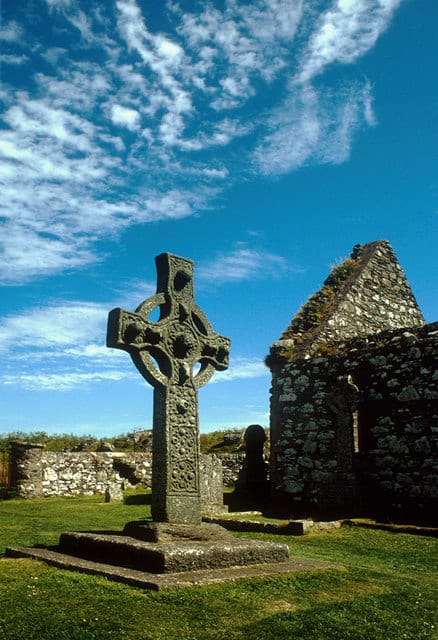
The Kildalton Cross on Islay
Islay’s distillery count has grown sharply in recent years. Ardnahoe opened in 2019, becoming the island’s ninth working distillery at the time. In March 2024, Diageo reopened Port Ellen after more than 40 years of silence, restoring one of Scotland’s most sought-after “ghost” distilleries to production. Most recently, Ian Macleod Distillers (owners of Glengoyne, Rosebank and Tamdhu) opened Laggan Bay near the island’s airport, filling its first cask in April 2026 and becoming Islay’s eleventh distillery. Two further distilleries are in development: Portintruan, being built by independent bottler Elixir Distillers, and Gartbreck, a long-delayed project now being progressed by Chivas Brothers.
Islay typically is known for its peaty, smoky whiskies, that make the whisky smell medicinal (Iodine), and carry hints of seaweed and brine. Typical examples of this style of whisky would be Ardbeg, Caol Ila, Laphroaig and Lagavulin (with the exception of Caol Ila, these are located on the southern part of Islay). These distilleries tend to expose their barley to long periods of peat smoke during the kilning process, leading to the phenols contained in the smoke to be absorbed by the barley. The level in which the phenol is present in the barley is known as the Phenol Parts per Million (or PPM). It’s measured when the barley is about to enter the mashing process. The smokey influences will be present during the entire whisky producing process, though the distillation diminishes the PPM typically with 60% of what it was prior to the mashing.
Not every Islay whisky follows this smoky template, though. Bunnahabhain‘s core range is built around lightly peated or completely unpeated malt, marketed as “the gentle taste of Islay,” and Bruichladdich’s unpeated Classic Laddie sits alongside its own heavily peated Port Charlotte and Octomore lines, all made from the same stills. Kilchoman, Islay’s first new distillery in over 100 years when it was founded in 2005, distils, matures and bottles on-site at Rockside Farm, continuing the island’s older tradition of farm distilling.
A protected region in its own right
Islay shares an unusual status with only four other Scottish areas: it’s one of the five whisky-producing regions with legal protection under the Scotch Whisky Regulations 2009, alongside Highland, Lowland, Speyside and Campbeltown. That protection means a whisky can only put “Islay” on its label if it was genuinely distilled on the island, the same rule that stops a Speyside or Highland distillery borrowing the name. It’s a status the neighbouring “Islands” category has never managed to secure; despite covering a much larger and more scattered group of distilleries, from Arran to Highland Park, it has no legal standing of its own and is officially classed as part of Highland. Islay earned its separate designation on the strength of its distillery density and its instantly recognisable peated style, a reminder that this single small island has shaped the whisky world’s idea of what “smoky” tastes like.
Currently active Islay distilleries:
Ardbeg – One of Islay’s most heavily peated whiskies, and the only distillery that’s banned independent bottlers from touching its stock since 1997
Ardnahoe – Opened in 2019, ending a 15-year gap in new distilleries on the island
Bruichladdich – One distillery, three personalities: unpeated Bruichladdich, heavily peated Port Charlotte, and Octomore, the most heavily peated whisky in the world
Bunnahabhain – Islay’s gentle exception, lightly peated where its neighbours pile on the smoke
Caol Ila – A high-volume distillery whose whisky mostly disappears into blends like Johnnie Walker
Kilchoman – A farm distillery, malting, distilling and bottling it all on site at Rockside Farm
Lagavulin – Distilling in the same bay since 1816, sandwiched between Laphroaig and Ardbeg
Laggan Bay – Filled its first cask in April 2026, becoming the island’s eleventh distillery
Laphroaig – Perhaps the most famous of all Islay whiskies, though it started off modestly
Port Ellen – Silent for 40 years, Diageo’s “ghost distillery” reopened in March 2024
In development:
Gartbreck (Planned, Chivas Brothers, on the site of Gartbreck farm)
Portintruan (Planned, Elixir Distillers)
Closed Islay distilleries include:
Achenvoir
Ardenistle
Ardmore
Daill
Freeport
Hazelburn (Not related to the brand currently produced at Springbank)
Kildalton
Killarow
Lochindaal (also known as Port Charlotte distillery; the site is now used by Bruichladdich for cask maturation, and the name lives on as a Bruichladdich peated whisky line, not a working distillery)
Lossit
Malt Mill
Mulindry
Newton
Octomore (the historic distillery site, distinct from Bruichladdich’s Octomore whisky brand)
Scarabus
Tallant
Torrylin
Frequently Asked Questions
Why is Islay classified as its own whisky region despite being an island?
Despite being an island, Islay isn’t considered part of the Island whisky region. Because of its sheer number of distilleries, it’s instead classified as a whisky region in its own right.
How many distilleries are active on Islay today?
11 distilleries are currently active on Islay, with two more in development. The number was once as high as 23, before 20th-century industry contractions closed most of them.
What is unique about Islay’s peaty style?
Islay whisky is typically peaty and smoky, with a medicinal, iodine-like character and hints of seaweed and brine. This comes from exposing barley to long periods of peat smoke during kilning, measured as Phenol Parts per Million (PPM); distillation typically reduces the PPM to about 40% of its pre-mashing level. Ardbeg, Caol Ila, Laphroaig and Lagavulin are typical examples of this style (Caol Ila aside, these sit on the island’s southern part).
Are all Islay whiskies peated?
No. Bunnahabhain‘s core range is built around lightly peated or completely unpeated malt, marketed as “the gentle taste of Islay,” and Bruichladdich‘s unpeated Classic Laddie sits alongside its own heavily peated Port Charlotte and Octomore lines, all made from the same stills.
Is “Islay” a legally protected term?
Yes. Islay is one of only five whisky-producing regions in Scotland with legal protection under the Scotch Whisky Regulations 2009, alongside Highland, Lowland, Speyside and Campbeltown, meaning a whisky can only be labelled “Islay” if it was genuinely distilled on the island.
What new distilleries have opened or reopened on Islay recently?
Ardnahoe opened in 2019, becoming the island’s ninth working distillery at the time. In March 2024, Diageo reopened Port Ellen after more than 40 years of silence. Most recently, Ian Macleod Distillers opened Laggan Bay near the island’s airport, filling its first cask in April 2026 and becoming Islay’s eleventh distillery.
Which distilleries are still in development on Islay?
Two further distilleries are in development: Portintruan, being built by independent bottler Elixir Distillers, and Gartbreck, a long-delayed project now being progressed by Chivas Brothers.
What happened to Port Ellen?
Port Ellen was one of Scotland’s most sought-after “ghost distilleries,” silent for more than 40 years before Diageo reopened it in March 2024.