Scapa distillery information
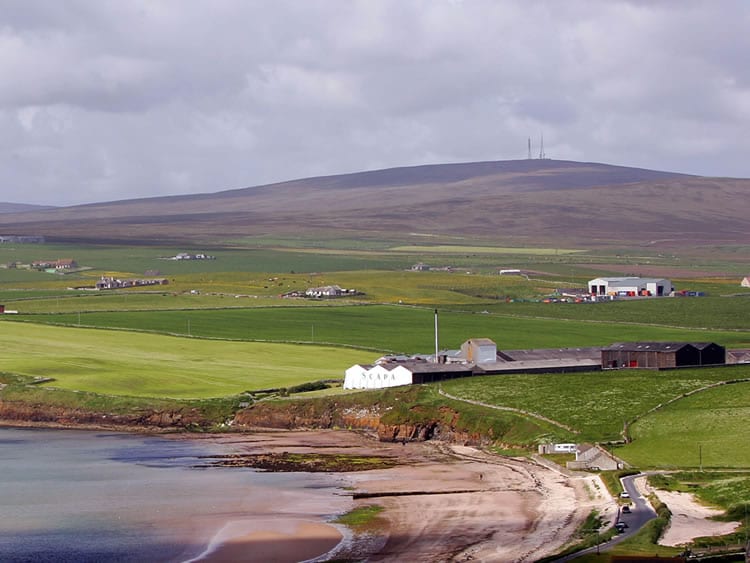
The Scapa distillery can be found on the remote island of Orkney Mainland, in the very north of Scotland. It’s situated on the shore of Scapa Flow, near the town of Kirkwall. Due to its remote location, its manager is not normally on-site, but rather he or his colleague travels to Orkney once every two to three weeks. At the site itself, a crew of only three manage the entire distillation process.
The distillery was established in 1885 by Glasgow blender John Townsend and his partner Macfarlane, hoping to break away from the concentration of distilling in Speyside. It was damaged by fire in 1919, the same year it changed hands to the newly formed Scapa Distillery Company Limited, and ceased production when that company went into voluntary liquidation in 1934. Bloch Brothers, who also owned Glen Scotia and Glengyle, bought the site and resumed production in 1936, before selling to the Canadian group Hiram Walker and Sons in 1954. Hiram Walker rebuilt the distillery in 1959, installing a Lomond still as a wash still, along with a purifier.
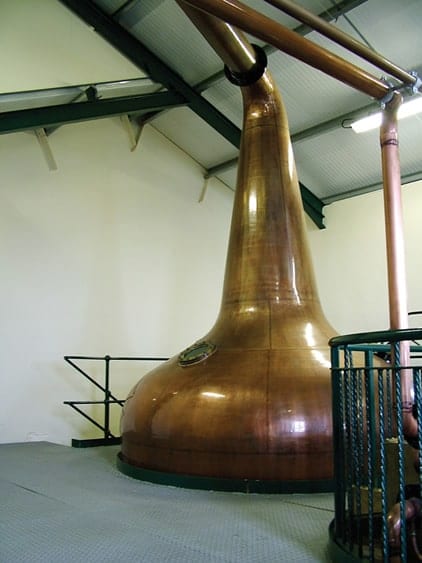
A Lomond still is a cylindrical still with a vertically mounted water jacket above it. Within the still neck there are three perforated plates that can be cooled independently. This allows the distiller to produce different types of whisky. Lomond stills have only been used in a handful of distilleries, including Loch Lomond, Miltonduff, Inverleven and Glenburgie. In 2010, Bruichladdich installed the still salvaged from the Inverleven distillery.
The Lomond still has since been adjusted, with the plates removed (they tended to get cluttered with residue, and thus require extensive labour intensive cleaning).
Hiram Walker’s later mergers passed the distillery to Allied Lyons in 1987 and Allied Domecq in 1994, the same year production was mothballed, save for occasional runs completed by the crew from the nearby Highland Park distillery. Rather than close the site for good, a refurbishment began in 2004, and the whisky returned as a single malt that year under a 14 year old age statement. The refurbishment was completed in 2005, when Pernod Ricard acquired Allied Domecq and Scapa became part of its portfolio, held today under its subsidiary Chivas Brothers. Around this point the age statement was upped from 14 to 16 years. Scapa opened its first visitor centre in 2015.
Scapa Whiskies
In 2024, Scapa introduced a new Signature Series, moving back to age-stated releases. The core range now consists of:
- Scapa 10 Year Old
- Scapa 16 Year Old
- Scapa 21 Year Old, a single batch release produced once a year, bottled at cask strength.
Scapa chose not to use peated barley for their malting, which is rather remarkable for an Island whisky. The water source for the whisky comes from the Lingro Burn and other sources on the hillside above the distillery, where it can pick up grassy, heatherish and flowery scents. This undoubtedly also adds to the honey hints that can be tasted in the whisky. t’s matured exclusively in Bourbon casks.
In 2025, Scapa released a Distillery Exclusive limited edition matured in first fill American oak barrels, made to mark the Orkney 2025 Island Games. It’s a non age statement release bottled at 48% ABV.
Past editions included:
- Scapa 12 year old
- Scapa 14 year old
- Scapa Glansa (no age statement)
- Scapa Skiren (no age statement)
Distillery info:
Detail |
Information |
|---|---|
| Name | Scapa |
| Region | Island |
| Country | Scotland |
| Logo |  |
| Status | Active |
| Founded | 1885 |
| Water source | Lingro Burn |
| Malting floor | No |
| Owned by | Pernod Ricard |
| Address |
Scapa Distillery |
| Visitor centre | Yes |
| Website | https://www.scapawhisky.com |
| https://www.facebook.com/ScapaDistillery | |
| Map |
Distillery Setup:
Component |
Capacity |
Quantity |
|---|---|---|
| Mash tun | 2.9 tonnes | 1 (stainless steel with copper dome) |
| Washback | 13,500 litres | 8 |
| Wash still | 13,500 litres | 1 |
| Spirit Still | 9,000 litres | 1 |
| Expected yearly output in LPA (Litres of pure alcohol) | 1,000,000 |
Frequently Asked Questions
Scapa sits on the shore of Scapa Flow on the remote island of Orkney Mainland, near Kirkwall, in the very north of Scotland. Due to that remote location, the manager isn’t normally on site, instead travelling to Orkney with a colleague once every two to three weeks, while a crew of just three handles the entire distillation process day to day.
Scapa was established in 1885 by Glasgow blender John Townsend and his partner Macfarlane, who hoped to break away from the concentration of distilling in Speyside. It was damaged by fire in 1919, the same year it passed to the newly formed Scapa Distillery Company Limited, and ceased production when that company went into voluntary liquidation in 1934.
Bloch Brothers, who also owned Glen Scotia and Glengyle, bought Scapa and resumed production in 1936, before selling to the Canadian group Hiram Walker and Sons in 1954. Hiram Walker’s later mergers passed the distillery to Allied Lyons in 1987 and Allied Domecq in 1994, the same year production was mothballed, save for occasional runs by the crew from nearby Highland Park. A refurbishment starting in 2004 brought Scapa back as a 14 Year Old single malt that same year, completed in 2005 when Pernod Ricard acquired Allied Domecq, folding Scapa into its portfolio under subsidiary Chivas Brothers.
In 1959, Hiram Walker rebuilt Scapa and installed a Lomond still as a wash still, along with a purifier. A Lomond still is a cylindrical still with a vertically mounted water jacket and three independently coolable perforated plates inside the neck, letting a distiller produce different styles of whisky from the same still. Lomond stills have only been used at a handful of distilleries, including Loch Lomond, Miltonduff, Inverleven and Glenburgie; in 2010, Bruichladdich installed the still salvaged from Inverleven. Scapa’s Lomond still has since had its plates removed, since they tended to clog with residue and needed labour-intensive cleaning.
Scapa chose not to use peated barley for malting, which is unusual for an Island whisky. Its water comes from the Lingro Burn and other sources on the hillside above the distillery, picking up grassy, heatherish and flowery scents along the way, which likely contribute to the honey notes found in the finished whisky. It’s matured exclusively in Bourbon casks.
In 2024, Scapa introduced a new Signature Series, returning to age-stated releases. The core range now consists of a 10 Year Old, a 16 Year Old, and a 21 Year Old, a single-batch release produced once a year and bottled at cask strength. Past editions have included a 12 Year Old, a 14 Year Old, and the no-age-statement Glansa and Skiren. In 2025, Scapa also released a Distillery Exclusive limited edition matured in first-fill American oak barrels to mark the Orkney 2025 Island Games, a non-age-statement release bottled at 48% ABV.
Yes. Scapa opened its first visitor centre in 2015.