The Excise Act of 1823: How Tax Reshaped Scotch Whisky | Scottish Delight
The British government passed the Scottish whisky excise act, also known as the Excise Act of 1823, to increase revenue and exert more control over the whisky industry in Scotland. Prior to the act, the production of whisky in Scotland was largely unregulated and the excise tax on the spirit was relatively low. However, this law greatly impacted the production and distribution of whisky in the country.
The impact of the Excise Act of 1823 was immediate and far-reaching. The increased tax hit small-scale producers hard, forcing many of them out of business. Those who remained in the industry were forced to find ways to produce and distribute their whisky without drawing the attention of the government’s excise officers. This led to the rise of illegal, or “moonshine” whisky production, which continued for many years despite the government’s efforts to stamp it out.
The act also led to the consolidation of the whisky industry in Scotland. With the increased tax, it became more difficult for small-scale producers to compete with larger, more established distilleries. As a result, many small distilleries were forced to merge with or sell out to larger ones in order to stay in business. This ultimately led to the creation of several large, powerful distilleries that dominated the Scottish whisky industry for many decades.
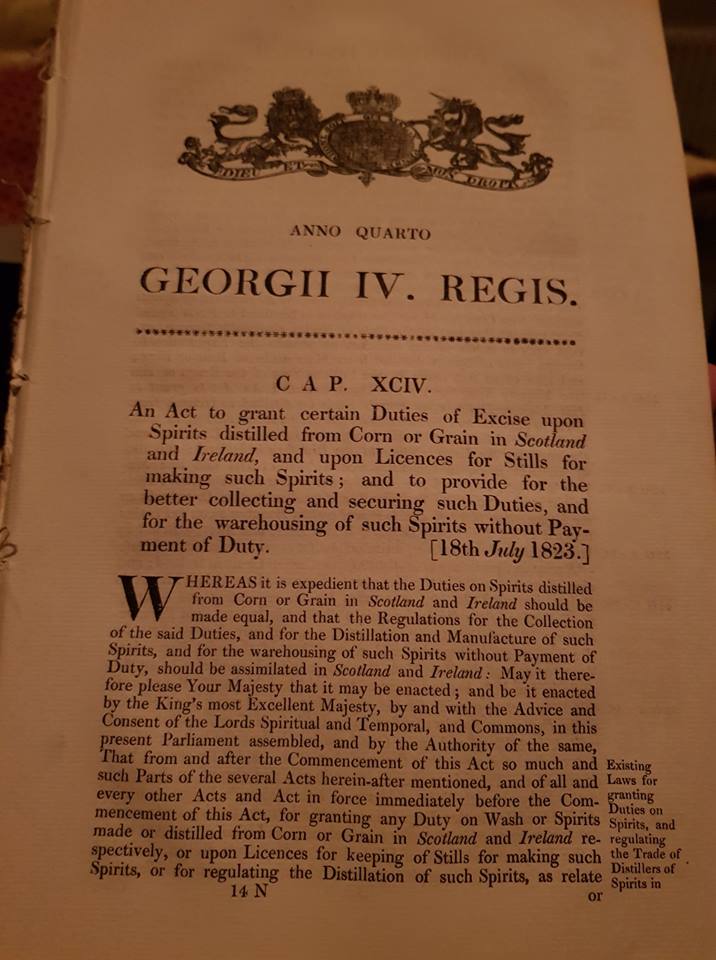
A picture of the original Whisky Excise Act
Despite the negative impact of the Excise Act of 1823 on the whisky industry in Scotland, it ultimately paved the way for the development of the high-quality, aged Scotch whiskies that are so highly prized today. The act’s regulations and the need for distillers to find ways to evade them led to the development of new methods for producing, aging, and distributing whisky. These methods, along with the use of high-quality ingredients, helped to create the unique flavor and characteristics of Scottish whisky that we know today.
One of the most famous effects of this act was the creation of a large amount of illicit stills in Scotland. Spirits were initially smuggled and contributed to an important chapter in the history of Scottish whisky. Now these distilleries, passed down through generations, became legal and some of them are part of Scotland’s national heritage.
Frequently Asked Questions
What was the Excise Act of 1823?
The Excise Act of 1823 (also known as the Scottish whisky excise act) was a law passed by the British government to increase revenue and exert more control over the whisky industry in Scotland, replacing a system where whisky production had been largely unregulated with relatively low excise tax.
Why did the British government pass the Excise Act of 1823?
The government’s main goals were to raise more tax revenue and gain greater control over whisky production, which prior to the act had gone largely unregulated with a relatively low excise tax on the spirit.
How did the Excise Act affect small-scale whisky producers?
The increased tax hit small-scale producers hard, forcing many out of business entirely. Those who remained had to find ways to produce and distribute their whisky without drawing the attention of the government’s excise officers.
Did the Excise Act lead to illegal whisky production?
Yes. The heavier tax burden led to a rise in illegal, or “moonshine,” whisky production, which persisted for many years despite government efforts to stamp it out, and created a large number of illicit stills across Scotland.
How did the Excise Act change the structure of the Scotch whisky industry?
The higher tax made it harder for small-scale producers to compete with larger, more established distilleries, pushing many small distilleries to merge with or sell out to bigger ones. This consolidation created several large, powerful distilleries that went on to dominate the Scottish whisky industry for decades.
What long-term impact did the Excise Act have on Scotch whisky quality?
Despite its immediate negative effects, the act ultimately paved the way for the high-quality, aged Scotch whiskies prized today. The regulations, and distillers’ efforts to work around them, spurred new methods of producing, aging, and distributing whisky that helped shape the distinctive flavor and character of Scotch whisky.
Which distillery is a famous example of going legal under the new Excise Act?
The Glenlivet is one of the best-known examples. Established by John Smith in 1825 on the site of a former illegal farm distillery, Smith recognized there was money to be made by operating legally under the new licensing regime, despite fierce resentment from his still-illicit neighbors, some of whom reportedly made attempts on his life.