
GlenDronach Distillery Information
The GlenDronach distillery was founded in 1826 by GlenDronach Distillery Co.; a partnership spearheaded by James Allardice. GlenDronach is located in the Deveron part of the Scottish Highlands. More specifically, it’s located near Forgue, By Huntly in Aberdeenshire. The distillery was built in an existing estate called the Glen House, which was built in 1771, and converted to a distillery in 1826.
Disaster struck in 1837 though, and a fire destroyed the distillery. It’s claimed this was due to a lack of oversight by management. For the time, though, fires erupting in distilleries were pretty common (imagine that. Open fires and alcohol vapors prior to the age of proper safety controls).
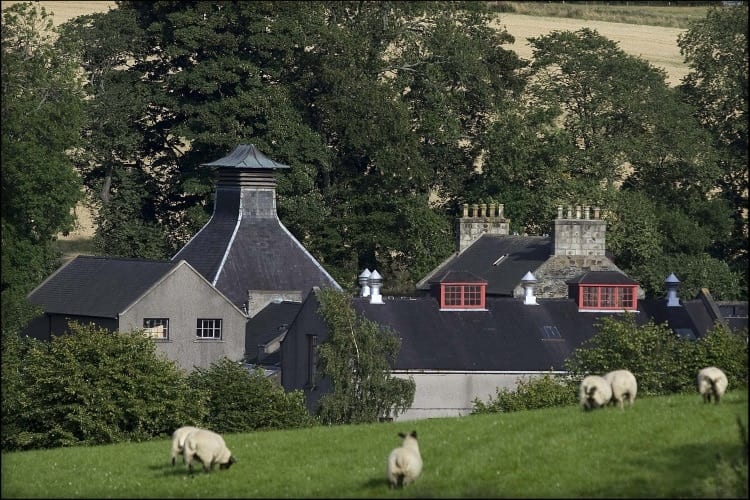
James Allardice went bankrupt in 1842, with the company being acquired by Walter Scott (who was a former manager at Teaninich) and Alexander Ross. In 1887 GlenDronach was acquired by a consortium from Leith. In 1916, it was acquired by the Crown. The distillery then went silent for a while until 1920, when it was purchased by Captain Charles Grant, a son of William Grant (from GlenFiddich). He controlled GlenDronach until 1960.
In 1960, GlenDronach was sold to William Teacher & Sons Ltd, who doubled the production capacity of the distillery. At the same time, great care was taken to ensure the distillery could continue to produce their spirit in the traditional manner, with a malting floor, Oregon pine washbacks, their own peat-fired kiln, and stills fired directly by coal. Between 1966 and 1967, two additional stills were fitted, bringing the total to four (coal fired). In 1976, William Teacher & Sons Ltd are absorbed by Allied Breweries, who decided to mothball the distillery in 1996. That year also marked the retirement of the malting floors.

When all hope seemed lost for GlenDronach, in 2002, it suddenly sprang back to life, again ceasing producing to have the stills converted to indirect steam heating in 2005. In that same year, Allied Domecq (who acquired Allied Breweries) were taken over by Pernod Ricard, who in turn passed the distillery to their subsidiary Chivas Brothers. In 2008, the distillery passed hands again, this time to the BenRiach Distillery Company Ltd. (who also own Benriach and Glenglassaugh). They’ve been investing heavily in the distillery since, releasing several new expressions.
In 2016, Brown-Forman acquired the BenRiach Distillery Company, bringing GlenDronach, BenRiach and Glenglassaugh together under Brown-Forman ownership.
GlenDronach Whiskies
GlenDronach prides itself on its richly Sherry flavored whisky.
Core range:
- Aged 12 Years
- Aged 15 Years
- Aged 18 Years
- Aged 21 Years
- Aged 30 Years
- Aged 40 Years
Travel Exclusive:
- Aged 10 Years
- Aged 16 Years
- The Sevillian Room
- The Venetian Room
- The Parisian Room
Special Releases:
- Ode to the Dark
- Ode to the Embers
- Ode to the Valley
- Aged 56 Years
- Boynsmill House Edition
- Batch 12 Grandeur
- Aged 50 Years
The Archives:
- Port Wood
- Peated Port Wood
- Traditionally Peated
- Aged 33 Years
- The GlenDronach Octaves
- Kingsman Edition 1989 Vintage
- Kingsman Edition 1991 Vintage
- Cask Strength Batch 11
- Grandeur Batches 7 through 12, plus a Grandeur Aged 31 Years
- Recherché 1968 Vintage
- 1993 Master Vintage
- Sauternes Wood Finish (two versions)
- Tawny Port Wood Finish (three versions)
- Marsala Wood Finish
- Moscatel Finish
- Madeira Wood Finish
Distillery info:
Detail |
Information |
|---|---|
| Name | GlenDronach |
| Region | Highland |
| Country | Scotland |
| Logo |  |
| Status | Active |
| Founded | 1826 |
| Water source | Dronach Burn |
| Malting floor | No |
| Owned by | The BenRiach Distillery Company Ltd. |
| Address |
Glendronach Distillery |
| Visitor centre | Yes |
| Website | https://www.glendronachdistillery.com/ |
| https://www.twitter.com/glendronach | |
| https://www.facebook.com/TheGlenDronach/ | |
| https://www.instagram.com/theglendronachofficial/ | |
| Map |
Distillery Setup:
Component |
Capacity |
Quantity |
|---|---|---|
| Mash tun | 4 tonnes | 1 (cast iron, rake-and-plough) |
| Washback | 18,125 litres | 9 (Oregon Pine / Scottish pine) |
| Wash still | 12,000 litres | 2 |
| Spirit Still | 9,000 litres | 2 |
| Expected yearly output in LPA (Litres of pure alcohol) | 1,300,000 |
Images courtesy of the GlenDronach distillery.
Frequently Asked Questions
Glendronach was founded in 1826 by Glendronach Distillery Co., a partnership led by James Allardice. It’s located near Forgue, by Huntly in Aberdeenshire, in the Deveron part of the Scottish Highlands, built on an existing estate called the Glen House that dated back to 1771.
Yes. A fire destroyed the distillery in 1837, reportedly due to a lack of oversight by management, though fires were fairly common across distilleries at the time, given open flames and alcohol vapours before the era of proper safety controls.
James Allardice went bankrupt in 1842, and the company was acquired by Walter Scott, a former manager at Teaninich, along with Alexander Ross. A consortium from Leith bought Glendronach in 1887, followed by the Crown in 1916, after which the distillery went silent for a time until Captain Charles Grant, son of William Grant of Glenfiddich, bought it in 1920 and controlled it until 1960.
William Teacher & Sons Ltd bought Glendronach in 1960 and doubled its production capacity, while taking care to preserve traditional production: a malting floor, Oregon pine washbacks, its own peat-fired kiln, and coal-fired stills. Two more stills were added between 1966 and 1967, bringing the total to four.
William Teacher & Sons Ltd was absorbed by Allied Breweries in 1976, which mothballed the distillery in 1996. During this silent period, the malting floors ceased regular production in the same year.
Glendronach revived in 2002, then briefly ceased production again in 2005 to convert its stills to indirect steam heating. That same year, Allied Domecq, which had acquired Allied Breweries, was taken over by Pernod Ricard, who passed the distillery to subsidiary Chivas Brothers. In 2008, ownership passed again, this time to the BenRiach Distillery Company Ltd, which also owns Benriach and Glenglassaugh, and has invested heavily in the distillery since, releasing several new expressions.
In 2016, Brown-Forman acquired the BenRiach Distillery Company, and GlenDronach has been part of the Brown-Forman portfolio since.
Glendronach prides itself on its richly Sherry-flavoured whisky.
The core range includes 12 Year Old, 15 Year Old, 18 Year Old, 21 Year Old, 30 Year Old and 40 Year Old.
Yes, Glendronach has a visitor centre.