Brora distillery information
In 1819, the Brora distillery in the town of the same name is built by the Marquis of Stafford, who later on became the Duke of Sutherland. The duke and his Duchess owned large areas of land, and forcefully removed farmers from it, in order to have the distillery built. Originally, the GBP 750 distillery was named Clynelish, and it operated under that name until 1968. We will come back to the renaming in a moment, but let us explore some of the history of the distillery first.
The first decades of its existence, the distillery struggled. Numerous subsequent licensees failed and ended up going bankrupt. They include James Harper, John Matheson, Andrew Ross and George Lawson among others. However, the quality of the spirit produced was good, and was quite popular both locally and within the UK, but also abroad.
Finally some success
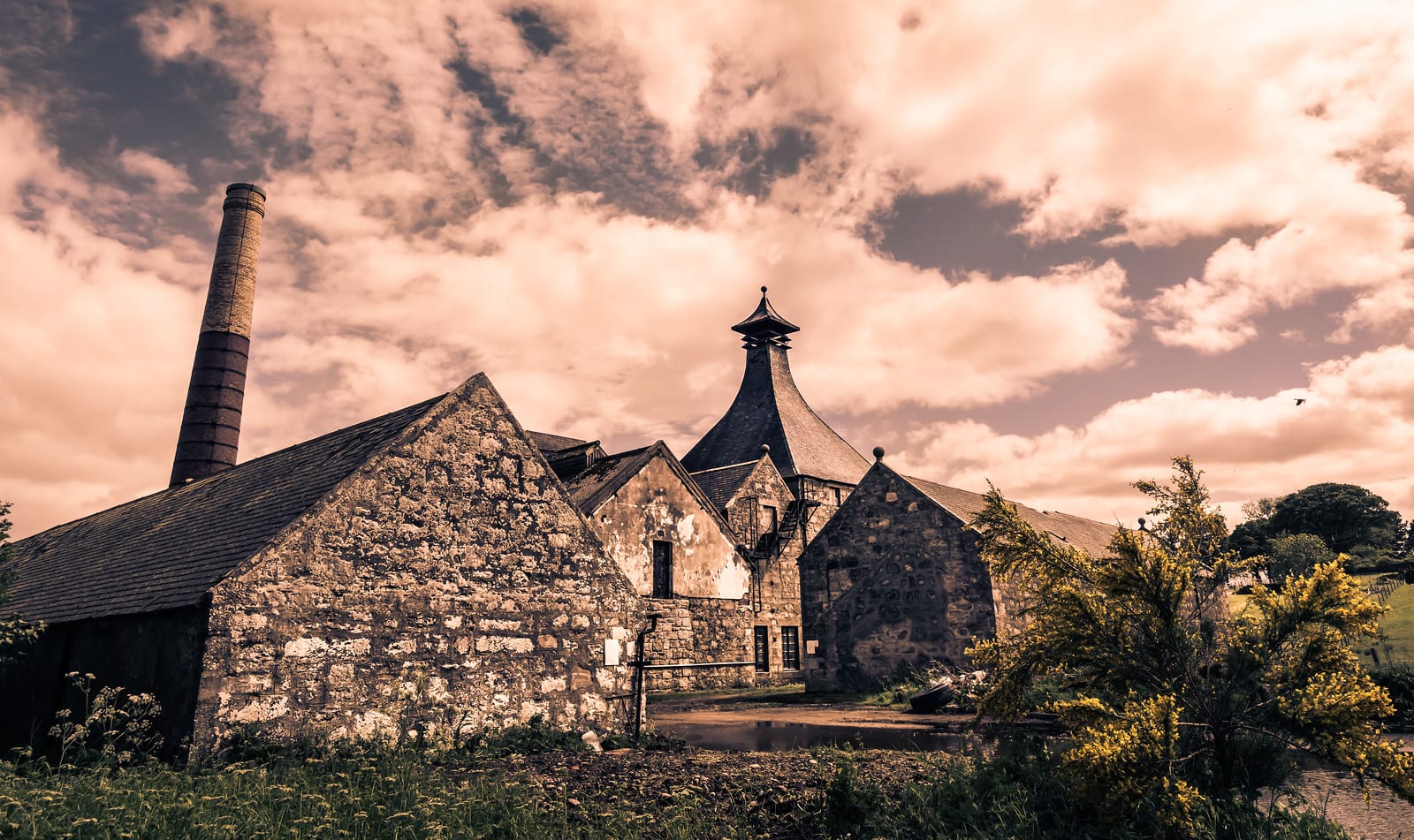
In 1896, James Ainsley & Co., whisky blenders located in Glasgow, acquired half the stocks of the distillery, with the other half owned by John Risk. Risk previously owned the Falkirk based Bankier distillery. Under their ownership, the distillery was rebuilt, and the quality of spirit produced as well as the reputation of the Brora distillery slowly improved. Around the turn of the century, the distillery struggled, due to the global whisky crisis triggered by the Pattison crash.
In 1912, John Risk, working together with Distillers Company Ltd. (DCL), takes over full ownership of the distillery. In 1916, John Walker & Sons Ltd. also became shareholders, and in 1925 and 1930 Risk is bought out altogether. In 1930, DCL becomes the sole owner of the distillery. DCL then is absorbed into Scottish Malt Distillers Ltd. (SMD). Brora was mothballed between 1931 and 1939, but produced small amounts of spirits while WW2 raged over Europe.
A new Clyenelish distillery
Brora was switched to steam heating for the stills in 1961, and electricity was also installed in the 1965s, replacing the old water wheel. As noted before, the distillery initially operated under the name of Clynelish. However, in 1967 work started on a second distillery with 6 stills next to the existing one. When that went into production in 1968, the new distillery initially operated under the name Clyenlish 2 (Or Clynelish B). The older one was initially closed, only to reopen in 1969.
When it reopened, the whisky produced was heavily peated. This was to compensate the lack of whisky coming out of Caol Ila at the time, due to a rebuilding of that distillery. After the rebuilding finished and Caol Ila resumed production in 1973, the amount of peat used for Brora started slowly declining, with more peaty expressions still released every so often. In 1975, new legislation required that no two distilleries could operate under the same name, and Clynelish 1 was renamed to Brora.
Closing
It continued operating until March 1983, when the distillery was closed altogether. After the closing, Brora became somewhat of a cult whisky, with prices shooting up over time. Recently released bottles are taken from existing stock.
Reopening
Brora reopened in May 2021 after standing silent for 38 years. Diageo undertook a three-year restoration as part of a wider £35 million investment programme that also brought Port Ellen back into production. The stillhouse was dismantled and rebuilt stone by stone to match its 1819 original, and the distillery’s two original copper stills were refurbished and returned to use.
Brora remains one of Diageo’s smallest distilleries, producing around 800,000 litres of spirit a year. Visits are by appointment only, bookable through the distillery’s own site, and are positioned as an exclusive experience rather than a standard walk-in visitor centre.
Note: Diageo’s neighbouring Clynelish visitor centre is separate from Brora and closed in early 2026 due to cost cutting. Brora’s own production and visitor bookings continue unaffected.
Brora Whiskies
Most whisky produced found its way into blends. However, a steady release of Single Malts also was released. Some memorable ones include:
- 24 Year Old, distilled in 1977. Rare Malts release.
- 30 Year Old, distilled in 1976. Independent bottling, released by Douglas Laing.
- 30 Year Old, released in 2010. 9th release.
- 32 Year old, released in 2011. Limited to 1,404 bottles.
- 44 Year old, distilled in 1972. The oldest whisky ever released from Brora. This can explain why a bottle of it was sold for over GBP 14,000.
Distillery info:
Detail |
Information |
|---|---|
| Name | Brora |
| Region | Highland |
| Country | Scotland |
| Logo |  |
| Status | Active |
| Founded | 1819 |
| Water source | Clynemilton burn |
| Malting floor | No |
| Owned by | Diageo |
| Address |
Brora Distillery +44 (0) 1408 623000 |
| Visitor centre | Yes |
| Website | https://www.malts.com/en/distilleries/brora |
| Map |
Distillery Setup:
Component |
Capacity |
Quantity |
|---|---|---|
| Mash tun | 6.8 tonnes | 1 |
| Washback | 20,000 litres | 6 |
| Wash still | 13,500 litres | 1 |
| Spirit Still | 13,500 litres | 1 |
| Expected yearly output in LPA (Litres of pure alcohol) | 1,000,000 |
Frequently Asked Questions
Brora was built in 1819 by the Marquis of Stafford, later the Duke of Sutherland, who owned large areas of land and forcefully removed farmers from it to have the distillery built. The distillery, which cost 750 GBP, was originally named Clynelish and operated under that name until 1968.
Yes. Numerous early licensees, including James Harper, John Matheson, Andrew Ross and George Lawson, went bankrupt trying to run the distillery. Despite this, the quality of its spirit was good and popular both locally and abroad.
In 1896, Glasgow whisky blenders James Ainsley & Co acquired half the distillery’s stock, with the other half owned by John Risk, formerly of the Falkirk-based Bankier distillery. Under their ownership, the distillery was rebuilt and its quality and reputation improved, though it struggled again around the turn of the century due to the Pattison crash.
John Risk took over full ownership in 1912 alongside Distillers Company Ltd (DCL). John Walker & Sons Ltd became shareholders in 1916, and Risk was bought out entirely between 1925 and 1930, leaving DCL as sole owner. DCL was later absorbed into Scottish Malt Distillers Ltd. The distillery was mothballed between 1931 and 1939, though it produced small amounts of spirit during the Second World War.
In 1967, work began on a second distillery with six stills next to the existing one. When it entered production in 1968, it was initially called Clynelish 2, while the older distillery closed and reopened in 1969. New legislation in 1975 barred two distilleries from sharing a name, so the older site was renamed Brora.
When the older distillery reopened in 1969 as a heavily peated whisky, it was meant to compensate for the shortfall in Caol Ila‘s production while that distillery was being rebuilt. Once Caol Ila resumed production in 1973, the level of peat used at Brora gradually declined, though more peaty expressions were still released from time to time.
Brora closed in March 1983. Afterwards it became something of a cult whisky, with prices rising steadily over time; recently released bottles have been drawn from existing stock rather than new production.
Brora reopened in May 2021 after standing silent for 38 years. Diageo carried out a three-year restoration as part of a wider 35 million pound investment programme that also returned Port Ellen to production. The stillhouse was dismantled and rebuilt stone by stone to match the 1819 original, and the distillery’s two original copper stills were refurbished and returned to use. Brora remains one of Diageo’s smallest distilleries, producing around 800,000 litres of spirit a year, with visits by appointment only through the distillery’s own site.
Notable releases include a 24 Year Old distilled in 1977 as part of the Rare Malts series, a 30 Year Old distilled in 1976, a 30 Year Old 9th release from 2010, a 32 Year Old limited to 1,404 bottles in 2011, and a 44 Year Old distilled in 1972, the oldest whisky ever released from Brora, a bottle of which has sold for over 14,000 GBP.
Brora doesn’t operate a standard walk-in visitor centre; visits are by appointment only, bookable through the distillery’s own site, and positioned as an exclusive experience. Diageo’s neighbouring Clynelish visitor centre is a separate operation and closed in early 2026 due to cost cutting, but Brora’s own production and visitor bookings continue unaffected.