
Clydeside distillery information
The Clydeside Distillery brought whisky-making back to Glasgow’s historic dockside after more than a century away, though it wasn’t quite the city’s first modern revival: Glasgow Distillery in Hillington had already reopened the city to malt whisky production three years earlier, in 2014. Clydeside stands in the old Pumphouse at Queen’s Dock on the River Clyde, a red-brick Victorian building completed in 1877 that once controlled the hydraulic swing bridge into the harbour at the heart of Glasgow’s shipping trade.
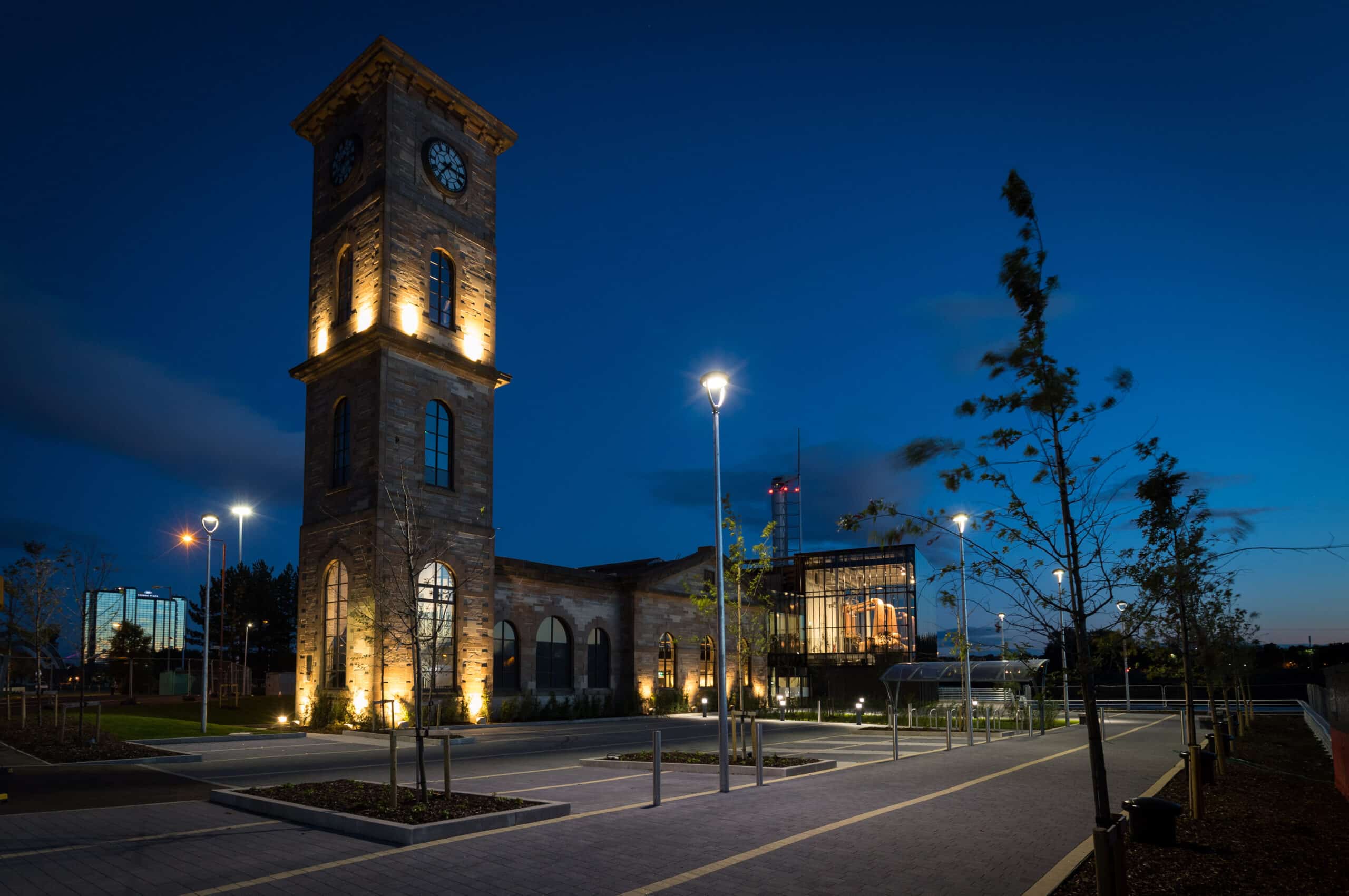
The distillery was founded by Tim Morrison of Morrison Glasgow Distillers, whose family name has been tied to Scotch whisky for generations. Tim Morrison’s family previously owned Morrison Bowmore, which included Bowmore, Auchentoshan and Glen Garioch, before selling to Beam Suntory in 1994. Tim Morrison is also the great-grandson of John Morrison, the engineer who built Queen’s Dock and its Pumphouse in the 19th century, so the Clydeside project brought the family back to a building their own ancestor had constructed generations earlier.
Morrison Glasgow Distillers bought the Pumphouse site in 2011 and planning approval to convert it followed in 2014. Construction work began in August 2016, and the first distillation took place on 6 November 2017. The visitor centre opened later that same month, on 23 November 2017. Clydeside became the second new malt distillery to open in Glasgow in over a century, following Glasgow Distillery in Hillington in 2014 (the Pumphouse site was originally meant to house the first, but excavation complications during the dock infill delayed the project).
Clydeside draws its water from Loch Katrine, the same source used by several other Glasgow-area producers. The house style leans deliberately away from a typical grassy, malty Lowland character, aiming instead for a lighter, fruitier spirit with a spicier edge, a nod to Glasgow’s history importing tobacco and spices through its docks.
Clydeside Whiskies
Clydeside’s core range currently sits at three single malts:
- Stobcross – the inaugural release, matured in American bourbon casks. Named after the historic Stobcross crossroads that once led to Dumbarton Rock, on the site later cleared to build Queen’s Dock itself. Bottled at 46%, natural colour, non-chill filtered. Nose of florals and fresh tropical sweetness, orchard fruit and white pepper on the palate, fresh fruity finish.
- Napier – matured for over six years in Oloroso sherry casks. Named for Robert Napier, the “Father of Clyde Shipbuilding,” whose original shipyard sat directly opposite the distillery. Bottled at 46%, natural colour, non-chill filtered. Ripe berry, sweet rose and tropical notes on the nose, orange marmalade, cherry and vanilla on the palate, warming clove and ginger to finish.
- Fortnight – – the peated addition to the core range, named for the brief two-week window each year when Clydeside runs peated spirit. The malt is peated to 54ppm phenols, though the character stays well short of a “peat monster” style. Matured over six years. Bottled at 46%, natural colour, non-chill filtered. Gentle smoke, stone fruit and vanilla on the nose, bright citrus and heather honey on the palate, warm spice and peat to finish.
Several limited editions have also been released, including COP26, a 2023 cask-strength edition, Velvet Odyssey with artist Jim Lambie, HMS Glasgow, and a 2026 World Cup edition.
Distillery info:
Detail |
Information |
|---|---|
| Name | Clydeside |
| Region | Lowland |
| Country | Scotland |
| Logo |  |
| Status | Active |
| Founded | 2017 |
| Water source | Loch Katrine |
| Malting floor | No |
| Owned by | Morrison Glasgow Distillers Limited |
| Address |
100 Stobcross Road, |
| Visitor centre | Yes |
| Website | https://www.theclydeside.com/ |
| https://www.twitter.com/clydesidewhisky | |
| https://www.facebook.com/theclydeside/ | |
| Community | THE VOYAGER CLUB |
| Map |
Distillery Setup:
Component |
Capacity |
Quantity |
|---|---|---|
| Mash tun | 1.5 tonnes | 1 (semi-lauter, stainless steel with copper dome) |
| Washback | 7,500 litres | 8 (stainless steel) |
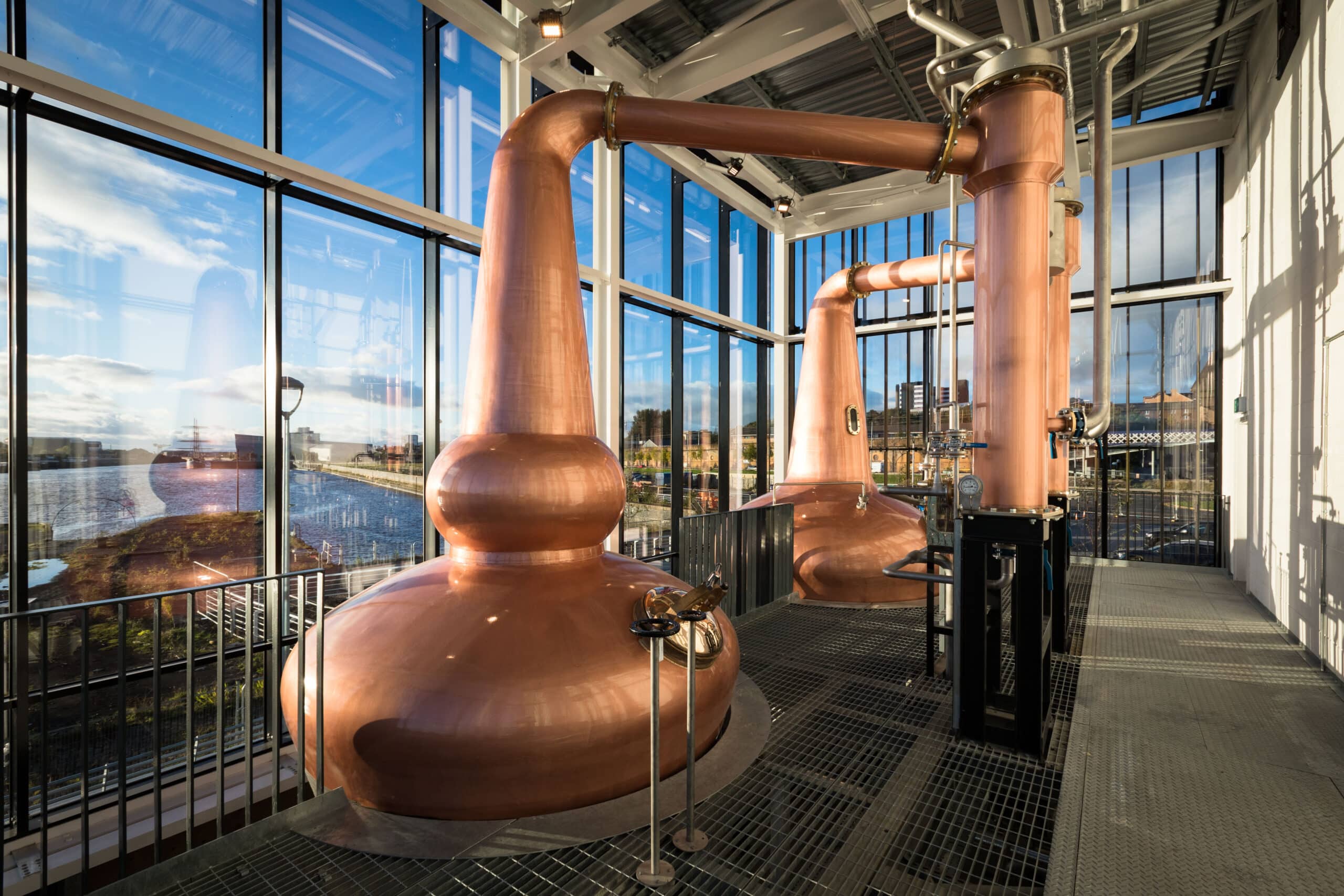
| Wash still | 8,000 litres | 1 (copper, Forsyths) |
| Spirit Still | 5,000 litres | 1 (copper, Forsyths) |
| Expected yearly output in LPA (Litres of pure alcohol) | 500,000 |
Images courtesy of the Clydeside Distillery
Frequently Asked Questions
Not quite. Glasgow Distillery in Hillington reopened the city to malt whisky production three years earlier, in 2014. Clydeside became the second new malt distillery to open in Glasgow in over a century, in 2017, bringing whisky-making back to the city’s historic dockside.
Clydeside stands in the old Pumphouse at Queen’s Dock on the River Clyde, a red-brick Victorian building completed in 1877 that once controlled the hydraulic swing bridge into the harbour at the heart of Glasgow’s shipping trade.
The distillery was founded by Tim Morrison of Morrison Glasgow Distillers, whose family name has been tied to Scotch whisky for generations. Tim Morrison’s family previously owned Morrison Bowmore, which included Bowmore, Auchentoshan and Glen Garioch, before selling to Beam Suntory in 1994. Tim Morrison is also the great-grandson of John Morrison, the engineer who built Queen’s Dock and its Pumphouse in the 19th century, so the Clydeside project brought the family back to a building their own ancestor had constructed generations earlier.
Morrison Glasgow Distillers bought the Pumphouse site in 2011, with planning approval to convert it following in 2014. Construction began in August 2016, the first distillation took place on 6 November 2017, and the visitor centre opened later that month, on 23 November 2017. The Pumphouse site was originally meant to house Glasgow’s first modern distillery, but excavation complications during the dock infill delayed the project, letting Glasgow Distillery open first instead.
Clydeside draws its water from Loch Katrine, the same source used by several other Glasgow-area producers. Rather than a typical grassy, malty Lowland character, the house style aims for a lighter, fruitier spirit with a spicier edge, a nod to Glasgow’s history importing tobacco and spices through its docks.
The core range consists of three single malts, all bottled at 46%, natural colour and non-chill filtered: Stobcross, the inaugural release matured in American bourbon casks and named after the historic Stobcross crossroads once located on the site later cleared to build Queen’s Dock; Napier, matured for over six years in Oloroso sherry casks and named for Robert Napier, the “Father of Clyde Shipbuilding”, whose original shipyard sat directly opposite the distillery; and Fortnight, the peated addition to the range, peated to 54ppm phenols and named for the brief two-week window each year when Clydeside runs peated spirit, matured over six years.
Yes, Clydeside has a visitor centre.