Wolfburn distillery information
Founded in 1821 by William Smith, Wolfburn distillery sits on the outskirts of Thurso, in the Highlands of Scotland, close to Old Pulteney, some 30 kilometers to the south-east. In those days, the Smith family invested heavily in the distillery, and with 125,000 litres of whisky produced annually, it was a major player in the region. The distillery remained in the hands of the Smiths until the 1850s or 1860s. The exact year has been lost to history: local records noted in 1872 that the distillery was “in ruins”, though by 1877 that description had been removed. Either way, the distillery closed and fell into ruin at some point in the second half of the 19th century.
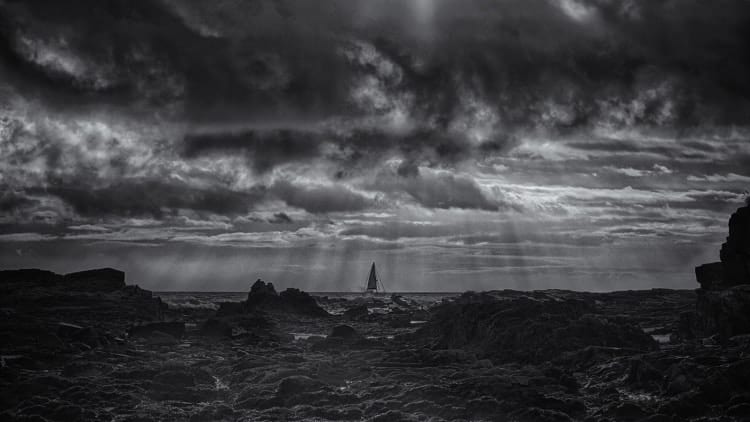
Caithness, the county surrounding the distillery, is known for its water. Wetlands and blanket peat bogs make the land unsuitable for farming, leaving it largely untouched and the water particularly pure. The region is regarded as one of Scotland’s last true wildernesses, and in July 2024 the Flow Country peatlands were formally inscribed as a UNESCO World Heritage Site.
In 2011, the new owners surveyed the site of the old distillery and decided to build the new Wolfburn distillery around 350 meters downstream of the original location. The land was purchased in May 2012 and construction began shortly after. The first spirit was distilled in late January 2013.
Wolfburn whiskies
The distillery originally planned to use only unpeated barley, but after customer demand, it produced its first batch using peated barley in July 2014, a style that has since become the Morven expression in the core range. Wolfburn aims for a light, fragrant spirit, achieved through a slow distillation process: a long fermentation, and a prolonged distillation kept at relatively low temperatures once the wort leaves the mash tun. Water is drawn from a 57,000 litre tank up-cycled from the closed Caperdonich distillery in Speyside. The spirit matures in a mix of European and American oak casks, both ex-bourbon and ex-sherry, with casks filled at 63.5% ABV.
Core range:
- Wolfburn 12 Year Old, the flagship expression, matured in equal parts second-fill Oloroso sherry butts and ex-bourbon casks, bottled at 46% ABV.
- Wolfburn 10 Year Old, the distillery’s first permanent age-statement release, bottled at 46% ABV.
- Wolfburn Northland (8 Year Old), matured in American oak quarter casks, bottled at 46% ABV.
- Wolfburn Aurora, matured in a mix of ex-bourbon and Oloroso sherry casks, no age statement, bottled at 46% ABV.
- Wolfburn Morven, a lightly peated expression made with smoke-dried malted barley, echoing the original 19th-century distillery’s peat-fired history, bottled at 46% ABV.
- Wolfburn Langskip, the cask-strength release, bottled at 58% ABV.
Distillery info:
Detail |
Information |
|---|---|
| Name | Wolfburn |
| Region | Highland |
| Country | Scotland |
| Logo |  |
| Status | Active |
| Founded | 2012 |
| Water source | Wolf Burn |
| Malting floor | No |
| Owned by | Aurora Brewing Ltd |
| Address |
Wolfburn Distillery |
| Visitor centre | No |
| Website | https://www.wolfburn.com/ |
| https://www.twitter.com/wolfburn_whisky | |
| https://www.facebook.com/wolfburn | |
| https://www.instagram.com/wolfburn_whisky/ | |
| TikTok | https://www.tiktok.com/@wolfburn_whisky |
| YouTube | https://www.youtube.com/@WolfburnDistillery |
| Map |
Distillery Setup:
Component |
Capacity |
Quantity |
|---|---|---|
| Mash tun | 1.1 tonnes | 1 |
| Washback | 5,500 litres | 3 (Stainless steel) |
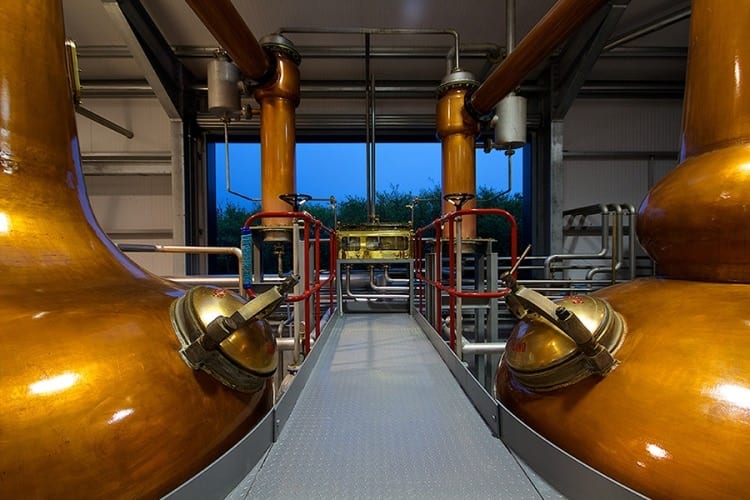
| Wash still | 5,500 litres | 1 |
| Spirit Still | 3,600 litres | 1 |
| Expected yearly output in LPA (Litres of pure alcohol) | 125,000 |
Images courtesy of the Wolfburn distillery
Frequently Asked Questions
The current Wolfburn distillery, built in 2012, takes its name from an earlier distillery of the same name founded in 1821 by William Smith. That original distillery sat on the outskirts of Thurso in the Highlands, close to Old Pulteney, some 30 kilometres to the south-east, and produced 125,000 litres of whisky annually under heavy investment from the Smith family, making it a major player in the region at the time.
The distillery remained in the Smith family’s hands until the 1850s or 1860s, though the exact year is lost to history: local records described the distillery as “in ruins” in 1872, but that description had been removed by 1877. Either way, the original distillery closed and fell into ruin at some point in the second half of the 19th century.
Caithness, the county surrounding Wolfburn, is known for its water. Its wetlands and blanket peat bogs make the land unsuitable for farming, leaving it largely untouched and the water particularly pure. The region is regarded as one of Scotland’s last true wildernesses, and in July 2024 the Flow Country peatlands were formally inscribed as a UNESCO World Heritage Site.
In 2011, the new owners surveyed the site of the old distillery and decided to build the new Wolfburn distillery around 350 metres downstream of the original location. The land was bought in May 2012, construction began shortly after, and the first spirit was distilled in late January 2013.
No. The distillery originally planned to use only unpeated barley, but after customer demand, it produced its first batch using peated barley in July 2014, a style that has since become the Morven expression in the core range.
Wolfburn aims for a light, fragrant spirit through slow distillation: a long fermentation followed by a prolonged distillation kept at relatively low temperatures once the wort leaves the mash tun. Water is drawn from a 57,000 litre tank up-cycled from the closed Caperdonich distillery in Speyside. The spirit matures in a mix of European and American oak casks, both ex-bourbon and ex-sherry, filled at 63.5% ABV.
The core range includes the flagship Wolfburn 12 Year Old, matured in equal parts second-fill Oloroso sherry butts and ex-bourbon casks; the Wolfburn 10 Year Old, the distillery’s first permanent age-statement release; Wolfburn Northland, an 8 Year Old matured in American oak quarter casks; Wolfburn Aurora, a no-age-statement release matured in a mix of ex-bourbon and Oloroso sherry casks; Wolfburn Morven, a lightly peated expression made with smoke-dried malted barley echoing the original 19th-century distillery’s peat-fired history; and Wolfburn Langskip, the cask-strength release at 58% ABV. All are bottled at 46% ABV except Langskip.
No, Wolfburn does not have a visitor centre.