Bruichladdich Distillery Information
The Bruichladdich distillery was established by the Harvey Brothers (William, John and Robert)in 1881 on the north side of Loch Indaal on the isle of Islay. It was the most western distillery in Scotland until 2005, when that title was passed on to the nearby Kilchoman distillery (since then, Abhainn Dearg took over that title in 2007). The Harvey family owned two distilleries in Glasgow (Yoker and Dundas Hill), and the brothers figured the time was right to start one of their own. The distillery itself was designed by John, engineered by Robert, and financed by William and other family members. At the time of construction, it broke tradition with the existing Islay farm distilleries, by using an efficient design with the distillery buildings around a spacious courtyard. It also employed techniques that were considered high-tech at the time (it was one of the first distilleries using concrete for construction), and was the first distillery to use anti-collapse valves; nowadays a standard piece of equipment in every distillery. The name is derived from Gaelic, and translates into “brae by the shore”.
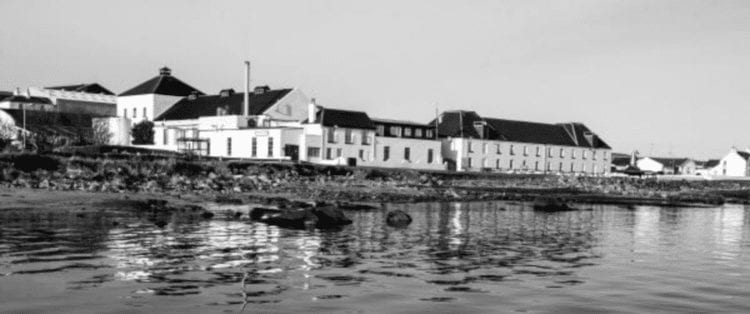
The Bruichladdich distillery remained under ownership of the Harvey family (though there was a major falling out with the investors, leading to a temporary closure from 1907 until 1919), ran by William, until 1929, when the global crisis forced it to shut down. In 1937, William passed away, and the distillery was sold off to a Joe Hobbs, who promptly resold it to Ross & Coulter Ltd; a company in which he had an interest. In 1952, they sold it to Ross and Coulter Ltd, whisky brokers from Glasgow. In 1960, the distillery was bought by AB Grant. 8 years later, in 1968, it once again changed hands; this time to Invergordon Distillers, who doubled the amount of stills in 1975.
In 1993, Jim Beam Brands (JBB), through their recently acquired Whyte & Mackay, took over Invergordon. Bruichladdich was judged redundant to their business and the distillery closed two years later, in 1995.
Luckily, a group of private investors led by wine merchant Mark Reynier bought the Bruichladdich distillery in late December 2000 using the name of Bruichladdich Distillery Co. Ltd. Under their guidance, the distillery was reopened, and established itself as a new and fresh brand. In 2012, Remy Cointreau took over ownership of the distillery.
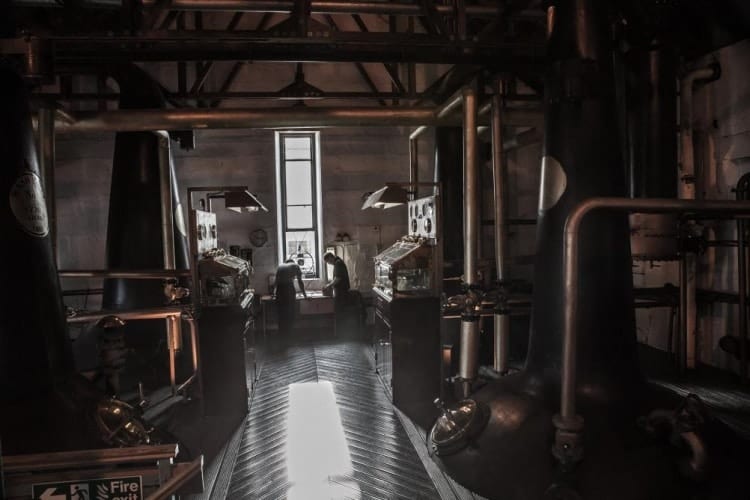
Nowadays, the distillery still has the exact same layout as when it was first constructed, and most of the original machinery is still in use. The wash still, for instance, has been repaired, rather than replaced, and is the same still that was fitted in 1881. Likewise, the mash tun recently was repaired, and rather than replacing the cast iron parts with newer stainless steel, the parts were recreated in cast iron, in order to preserve the traditional setup.
Since 2010, Bruichladdich has also distilled The Botanist, a small-batch dry gin using 22 hand-foraged Islay botanicals alongside nine classic gin botanicals. It’s made in an adapted Lomond still rescued from the demolished Inverleven distillery in Dumbarton, using a slow “simmer distillation” method rather than the faster techniques used by most commercial gins.
Bruichladdich whiskies
Bruichladdich’s whisky is unlike most other Islay malts in that its flagship spirit uses unpeated or very lightly peated barley — a deliberate point of difference on an island otherwise known for smoke. The distillery also produces two heavily peated ranges under separate brand names, Port Charlotte and Octomore, so drinkers know exactly what they’re getting. Wherever possible, Bruichladdich sources organic and Scottish-grown barley, and the distillery still runs largely on its original Victorian-era equipment.
Unpeated core range:
- The Classic Laddie – 100% Scottish barley, matured in American oak
- Islay Barley – distilled from barley grown on Islay itself
- The Organic – made with certified organic Scottish barley
- Bere Barley – uses Bere, one of the oldest cultivated barley strains in Scotland
- Black Art – a limited annual release matured in an undisclosed mix of cask types
Port Charlotte (heavily peated, ~40ppm):
- Port Charlotte 10 Year Old
- Port Charlotte Islay Barley
Octomore (super-heavily peated, some of the highest phenol levels in Scotch whisky):
- Released as numbered annual editions (currently in double figures)
Distillery info:
Detail |
Information |
|---|---|
| Name | Bruichladdich |
| Region | Islay |
| Country | Scotland |
| Logo |  |
| Status | Active |
| Founded | 1881 |
| Water source | An Torran Loch, The Bruichladdich burn, Octomore spring |
| Malting floor | No |
| Owned by | Rémy Cointreau |
| Address |
Bruichladdich Distillery Isle of Islay Argyll, +44 (0)1496 850 190 |
| Visitor centre | Yes |
| Website | https://www.bruichladdich.com/ |
| https://www.twitter.com/bruichladdich | |
| https://www.facebook.com/bruichladdich | |
| Map |
Distillery Setup:
Component |
Capacity |
Quantity |
|---|---|---|
| Mash tun | 7 tonnes | 1 (open top) |
| Washback | 35,000 / 40,000 litres | (Douglas Fir) |
| Wash still | 17,300 litres | 2 |
| Spirit Still | 12,274 litres | 2 |
| Expected yearly output in LPA (Litres of pure alcohol) | 1,500,000 |
Images courtesy of the Bruichladdich distillery
Frequently Asked Questions
Bruichladdich is pronounced brook-LADDIE, with the stress on the second part. The name comes from Scottish Gaelic and roughly translates to “brae by the shore.” It refers to the distillery’s location on the shore of Loch Indaal on Islay.
Bruichladdich comes from Gaelic and translates to “brae by the shore.”
Bruichladdich was established in 1881 by the Harvey brothers, William, John, and Robert, whose family already owned two distilleries in Glasgow, Yoker and Dundas Hill. John designed the distillery, Robert engineered it, and William and other family members financed it.
Bruichladdich sits on the north side of Loch Indaal on the isle of Islay, sharing that loch with Bowmore on the opposite shore.
It broke from the traditional Islay farm-distillery layout by arranging its buildings around an efficient, spacious courtyard, was one of the first distilleries built using concrete, and was the first to use anti-collapse valves, a piece of equipment that’s now standard across the industry. It also held the title of Scotland’s most westerly distillery until 2005, when Kilchoman took it over (Abhainn Dearg has held it since 2007).
Bruichladdich has been owned by Rémy Cointreau since 2012. Before that, it was closed for five years after Jim Beam Brands judged it redundant in 1995, until a group of private investors led by wine merchant Mark Reynier bought it in December 2000 and reopened it as Bruichladdich Distillery Co. Ltd.
Yes, twice. It closed from 1907 until 1919 following a falling-out between the Harvey family and its investors, and again from 1995 to 2000 after Jim Beam Brands (via Whyte & Mackay) judged it redundant, before Mark Reynier’s investor group reopened it.
Its flagship spirit uses unpeated or very lightly peated barley, a deliberate point of difference on an island best known for smoky whisky. Bruichladdich also produces two heavily peated ranges under separate brand names, Port Charlotte and Octomore, so drinkers know exactly what they’re getting.
Yes. Since 2010, Bruichladdich has also distilled The Botanist, a small-batch dry gin made with 22 hand-foraged Islay botanicals and nine classic gin botanicals, using a slow “simmer distillation” method in an adapted Lomond still rescued from the demolished Inverleven distillery.
Yes, Bruichladdich has a visitor centre.
Octomore takes its name from the Octomore spring, one of the water sources listed for Bruichladdich itself, alongside An Torran Loch and the Bruichladdich burn.
Octomore is widely regarded as the world’s most heavily peated whisky. Standard Islay peating levels typically sit around 30-50 ppm phenols, but some Octomore releases have used barley malted to over 300 ppm, with one edition reaching as high as 407 ppm.