Glenmorangie distillery information
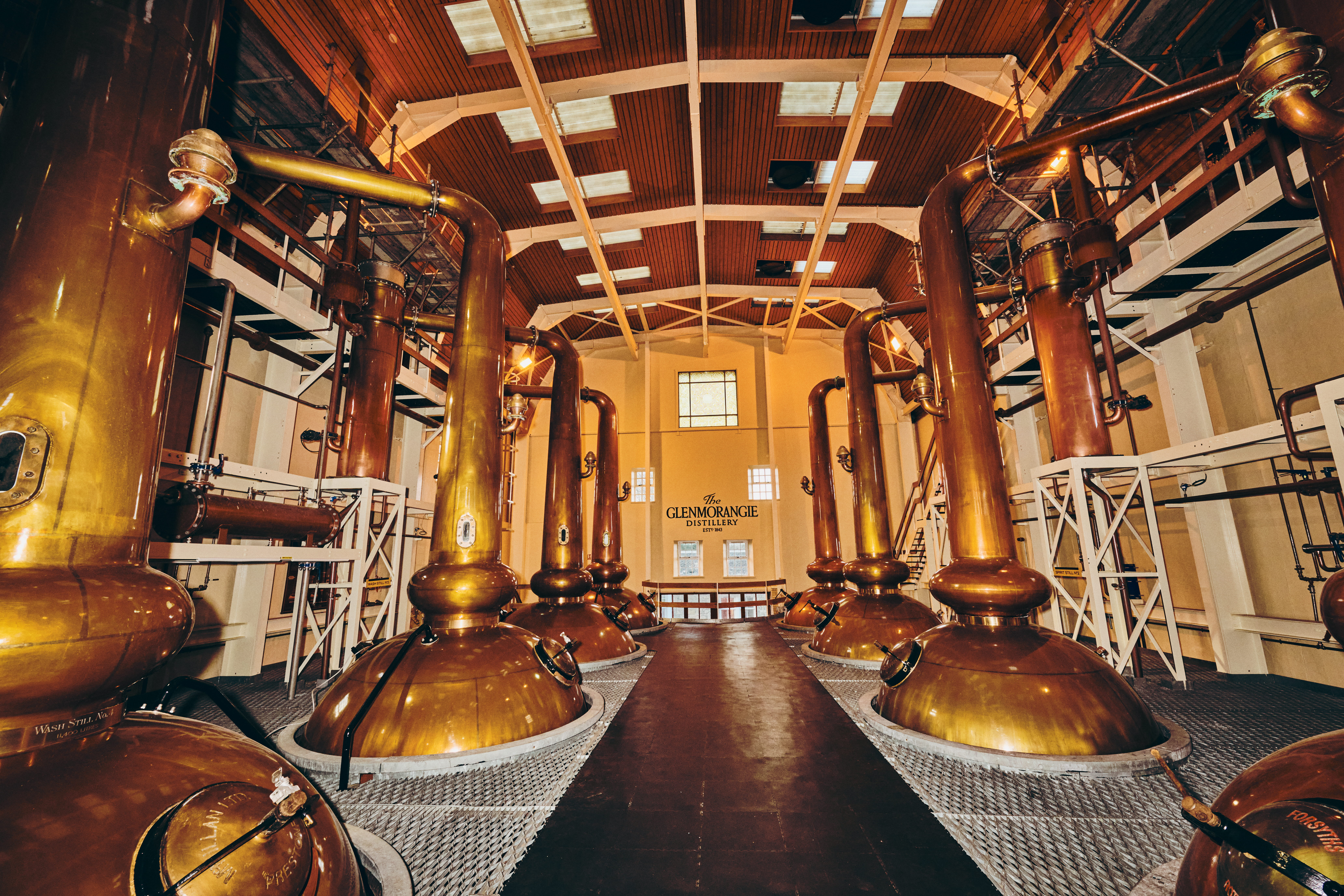
On the eastern coast of the Northern Highlands, on the Dornoch Firth, sits the town of Tain, home to the Glenmorangie distillery. Initially established as a brewery, in 1843 it was transformed into a distillery by William and John Matheson, the former having previously worked as a distillery manager at Balblair. With most of his funds spent on the purchase of the brewery and surrounding lands, William Matheson could only afford second-hand gin stills to equip the distillery. They traditionally have much longer necks than whisky stills, and as a result, there is much more time for the vapors and the copper to interact. The gin-stills turned out to be a blessing, as they give the Glenmorangie a unique character. The stills used today are exact replicas of the original stills from 1843, and they stand almost 8 meters (26 feet) tall, their thin, fragile-looking necks taking up 5 meters (16 feet), making them as tall as an adult giraffe.
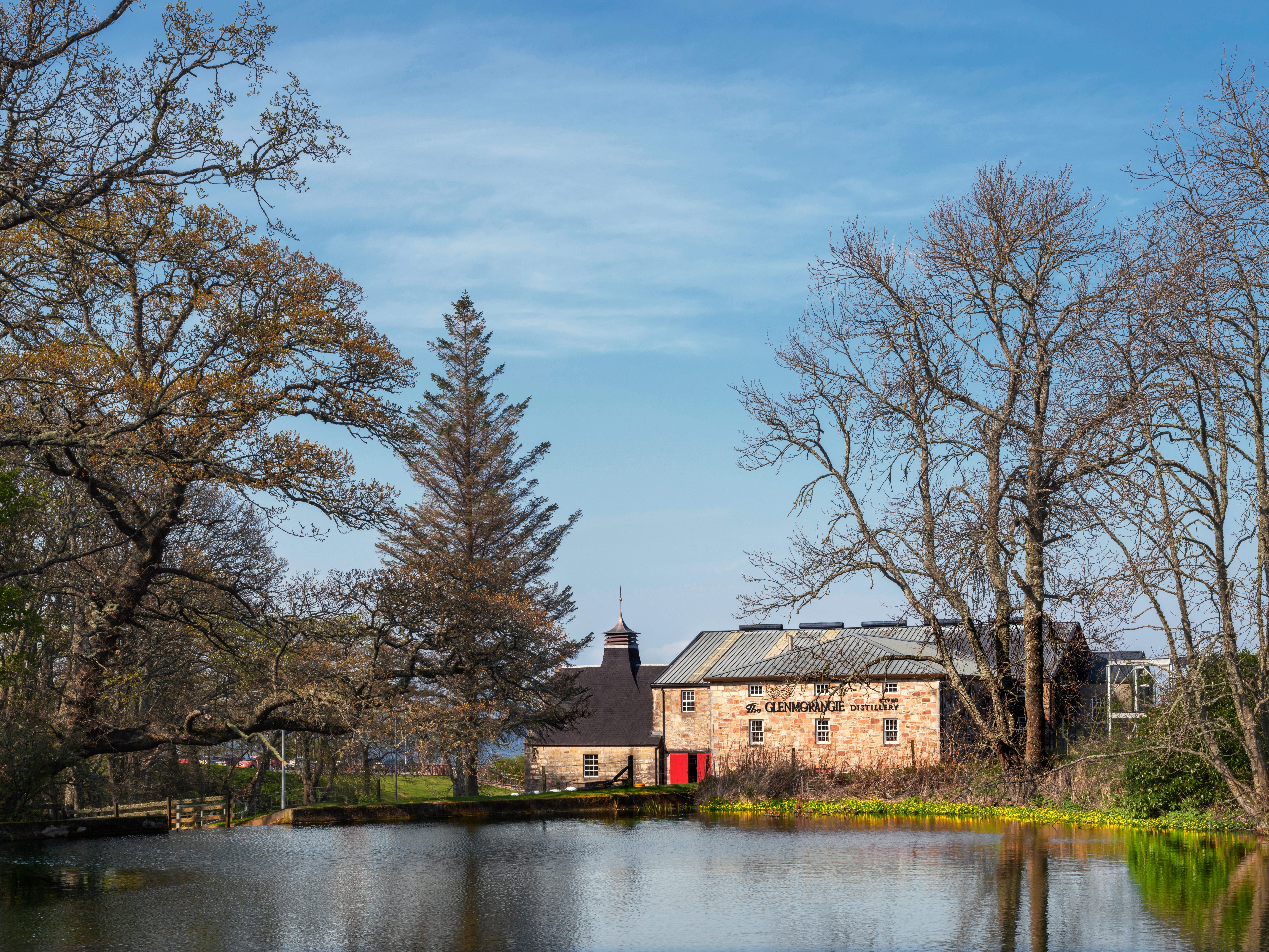
In 1887, the distillery was rebuilt, and its stills equipped with steam coils, then the latest technology for encouraging copper contact. In 1918 Glenmorangie changed hands to Macdonald and Muir, one of the main customers of the distillery at the time. Under their guidance, the distillery mostly provided whisky for blends. This changed in the 1970s, when the decision was made to put more emphasis on creating Single Malt instead. The malting floor was closed, and the number of stills was doubled from 2 to 4. In 1990, the number of stills doubled again to 8. Macdonald & Muir changed its name to Glenmorangie plc in 1996, and went on to purchase the Ardbeg distillery on Islay the following year.
In 2004, Glenmorangie plc bought the Scotch Malt Whisky Society (sold in 2015). That same year, the Macdonald family put their controlling stake in the company up for sale, and LVMH won a competitive bidding process against Pernod Ricard to acquire Glenmorangie for around £300 million. Between October 2008 and March 2009, the distillery closed for the addition of 2 extra pairs of stills, bringing the total to 12.
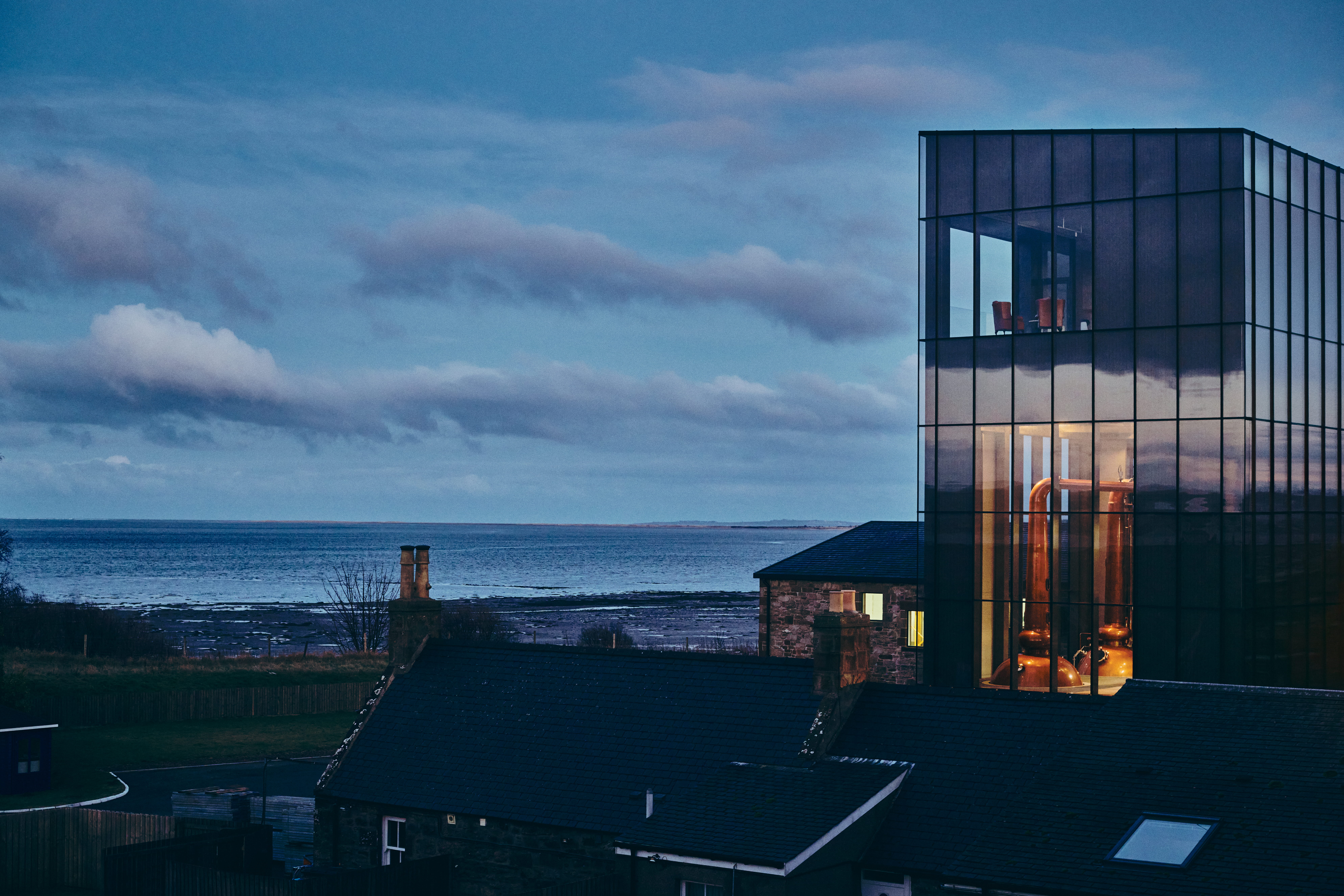
In September 2021, Glenmorangie opened The Lighthouse, an experimental micro-distillery on the same site overlooking the Dornoch Firth. Designed by Parisian architect Barthélémy Griño as a 20 metre glass tower, it gives director of whisky creation Bill Lumsden a dedicated space to explore styles and techniques beyond the traditional single malt process. Its two copper stills are closely modelled on the twelve in Glenmorangie’s main still house, with additional modifications built in for experimentation. Capacity tops out at around 1,000,000 litres of alcohol a year, roughly a sixth of the main distillery’s output, and Lumsden has described it as able to “recreate any style of distillation” the team wants to try.
Glenmorangie is one of the few distilleries to use hard water containing lots of minerals. Most other distilleries employ the use of soft water, as it’s deemed to produce better spirit. The minerals in the water also tend to build up residue on the inside of pipes. Minerals in the water might add different chemical congeners during fermentation that have an impact on the end-product.
Glenmorangie was also one of the earliest distilleries to talk openly about experimenting with non-traditional casks for double maturation (including Madeira and Port, the latter now being widely used for the final finish of particular whiskies). The company owns a private forest on the northern slopes of the Ozark mountains in Missouri, United States. The wood sourced there is laid to dry for 2 years, and then is turned into casks that are used by the Jack Daniel’s distillery, before making their way back to Scotland to be used for the first maturation of the whisky.
Glenmorangie Whiskies
The current core range of Glenmorangie contains the following whiskies:
- The Original 12 Years Old – matured in American white oak ex-bourbon casks, 40% ABV. Replaced the previous 10 Year Old expression.
- The Quinta Ruban 14 Years Old – finished in Portuguese ruby port pipes, 46% ABV. Up from a 12 Year Old age statement.
- The Lasanta – matured in bourbon and Oloroso sherry casks, 43% ABV. Age statement raised to 15 Years Old in an April 2025 relaunch (flagged below, some retailers still list 12).
- The Nectar 16 Years Old – matured in bourbon casks then finished across a combination of Sauternes, Monbazillac, Moscatel and Tokaji sweet wine casks, 46% ABV. Renamed and re-aged from the previous Nectar D’Or.
- Triple Cask Reserve – matured across three cask types, 40% ABV.
- Signet Reserve – chocolate malt whisky matured in a rare combination of casks, no age statement, 46% ABV. Successor to the original Signet.
- The Infinita 18 Years Old – 43% ABV. Successor to the previous 18 Years Old expression.
- The Altus 25 Years Old – 43% ABV, added as a permanent core range addition.
- The Thirty 30 Years Old – bourbon cask maturation with an extended Burgundy red wine cask finish, 43% ABV. Added to the core range in March 2026 as the oldest expression in the current lineup.
- X by Glenmorangie – entry-level, mixable single malt, no age statement, 40% ABV
Distillery info:
Detail |
Information |
|---|---|
| Name | Glenmorangie |
| Region | Highland |
| Country | Scotland |
| Logo |  |
| Status | Active |
| Founded | 1843 |
| Water source | Tarlogie Springs |
| Malting floor | No |
| Owned by | The Glenmorangie Company |
| Address |
Glenmorangie Distillery |
| Visitor centre | Yes |
| Website | https://www.glenmorangie.com/ |
| https://www.twitter.com/theglenmorangie | |
| https://www.facebook.com/glenmorangie | |
| https://www.instagram.com/glenmorangie/ | |
| https://www.linkedin.com/company/the-glenmorangie-company/ | |
| YouTube | https://www.youtube.com/glenmorangie |
| Map |
Distillery Setup:
Component |
Capacity |
Quantity |
|---|---|---|
| Mash tun | 10 tonnes | 1 (full-lauter, stainless steel) |
| Washback | 60,000 litres | 12 (stainless steel) |
| Wash still | 11,400 litres | 6 |
| Spirit Still | 8,200 litres | 6 |
| Expected yearly output in LPA (Litres of pure alcohol) | 6,000,000 |
Images courtesy of Glenmorangie.com
Frequently Asked Questions
Glenmorangie is pronounced glen-MOR-un-jee, with the stress on the second syllable rather than the fourth. “Glen” is Gaelic for valley, and “Morangie” is generally thought to mean “great tranquility” or “big meadows,” a nod to the glen near Tain where the distillery sits.
Glenmorangie was originally a brewery in the town of Tain, on the Dornoch Firth in the Northern Highlands, before William and John Matheson converted it into a distillery in 1843. William had previously worked as a distillery manager at Balblair, but with most of his funds spent on the brewery and its surrounding land, he could only afford second-hand gin stills. Gin stills traditionally have much longer necks than whisky stills, giving vapours far more time to interact with the copper, and this happy accident became a defining part of Glenmorangie’s character. Today’s stills are exact replicas of the 1843 originals, standing almost 8 metres tall, roughly the height of an adult giraffe.
Glenmorangie’s stills were fitted with steam coils in 1887, the latest technology at the time for encouraging copper contact. In 1918, the distillery passed to Macdonald and Muir, one of its main customers, who mostly used its whisky for blends. That changed in the 1970s, when the company decided to focus more on single malt, closing the malting floor and doubling the number of stills from two to four, then doubling again to eight in 1990.
Macdonald & Muir renamed itself Glenmorangie plc in 1996 and bought the Ardbeg distillery on Islay the following year.
In 2004, Glenmorangie plc bought the Scotch Malt Whisky Society, later sold in 2015. That same year, the Macdonald family put their controlling stake in Glenmorangie up for sale, and LVMH won a competitive bidding process against Pernod Ricard to acquire the company for around 300 million GBP. Between October 2008 and March 2009, the distillery closed to add two more pairs of stills, bringing the total to twelve.
In September 2021, Glenmorangie opened The Lighthouse, an experimental micro-distillery on the same site overlooking the Dornoch Firth. Designed by Parisian architect Barthelemy Grino as a glass tower, it gives director of whisky creation Bill Lumsden a dedicated space to explore styles and techniques beyond the traditional single malt process, using two custom pot stills built to the same tall, slender proportions as Glenmorangie’s originals. Capacity tops out at around 1,000,000 litres of alcohol a year, roughly a sixth of the main distillery’s output, and Lumsden has described it as able to “recreate any style of distillation” the team wants to try.
Glenmorangie is one of the few distilleries to use hard water rich in minerals, where most others favour soft water, believed to produce better spirit. The minerals can build up residue inside pipes, but they may also introduce different chemical congeners during fermentation that shape the character of the final whisky.
Glenmorangie was one of the earliest distilleries to talk openly about experimenting with non-traditional casks for double maturation, including Madeira and Port, the latter now widely used as a finishing cask across the industry. The company owns a private forest on the northern slopes of the Ozark Mountains in Missouri, USA. Wood sourced there is dried for two years, then made into casks used first by the Jack Daniel’s distillery before making their way back to Scotland for the first maturation of Glenmorangie’s whisky.
The core range includes The Original 12 Years Old, matured in American white oak ex-bourbon casks; The Quinta Ruban 14 Years Old, finished in Portuguese ruby port pipes; The Lasanta, matured in bourbon and Oloroso sherry casks and raised to a 15 Year Old age statement in an April 2025 relaunch; The Nectar 16 Years Old, matured in bourbon casks then finished across Sauternes, Monbazillac, Moscatel and Tokaji sweet wine casks; Triple Cask Reserve, matured across three cask types; Signet Reserve, a chocolate malt whisky matured in a rare cask combination with no age statement; The Infinita 18 Years Old; The Altus 25 Years Old; The Thirty 30 Years Old, matured in bourbon casks with an extended Burgundy red wine cask finish and added to the core range in March 2026 as the oldest expression in the current lineup; and X by Glenmorangie, an entry-level, mixable single malt with no age statement.
Yes, Glenmorangie has a visitor centre.