Strathisla distillery information
The Strathisla distillery (Shallow valley of the Isla) was founded on the banks of the river Isla in Keith in 1785 by George Taylor. He took a lease on a piece of land belonging to the Earl of Seafield, and building commended. In 1786, construction was completed, and a license was granted to Mulltown Distillery Co., which was made up by Taylor and Alexander Milne. As the name implies, the distillery at the time operated under the name Milltown distillery.
In the early 1820s, the distillery was sold to a local saddler following Taylor suffering a riding accident. In 1825, it changed hands again, this time to McDonald Ingram & Co., followed by John McDonald & Co. in 1828, who then sold it on to William Longmore in 1830. In 1870, the name of the distillery was officially changed to Strathisla. In 1876, a raging fire destroyed most of thew machinery in the distillery, and in 1879, a dust explosion destroyed machinery as well as buildings.
Reconstruction was luckily swift, and when the distillery was finished, it was fitted with its very own bottling plant. In 1880, Longmore retired, and was succeeded by his son in law John Geddes Brown using the name of William Longmore & Co. Ltd. The name of the distillery was changed to Milton (in reference to the nearby Milton Castle) in 1890. Around the time World War 2 broke out, the majority of shares in the distillery ended up in the hands of Londoner George Pomeroy, a banker. As it turned out, he was attempting to sell the whisky on the black market, and subsequently prosecuted. In 1949, he was found guilty of tax evasion, and the distillery was forced to declare bankruptcy.
It was bought from public auction by James Barclay, representing the Canadian company Seagrams, who bought the distillery for a measly GBP 71,000. Seagrams transferred the company to Chivas Brothers Ltd, itself just acquired by Seagrams. Chivas quickly went to work and renamed the distillery back to Strathisla in 1951. Following the takeover, the whisky produced at Strathisla became an important part of the Chivas Regal blends.
In 1965, the amount of stills was doubled from 2 to 4, both steam-heated. It would take until 1992 for the original 2 to become steam-heated as well. In 2001, Chivas is acquired by Pernod Ricard, who continue running the distillery even now.
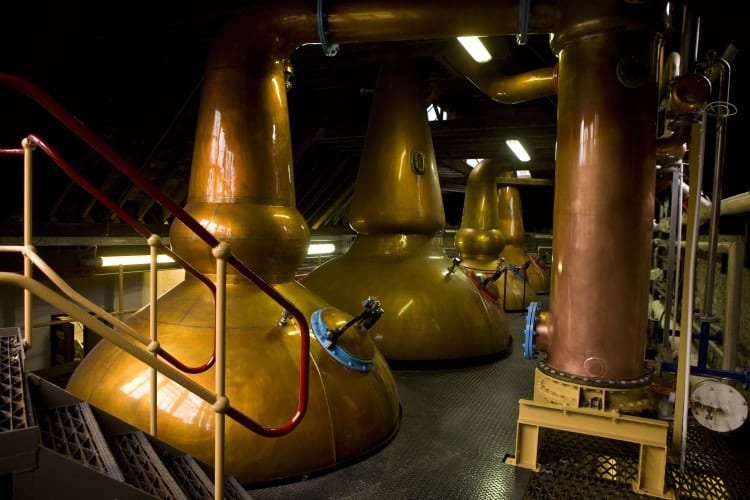
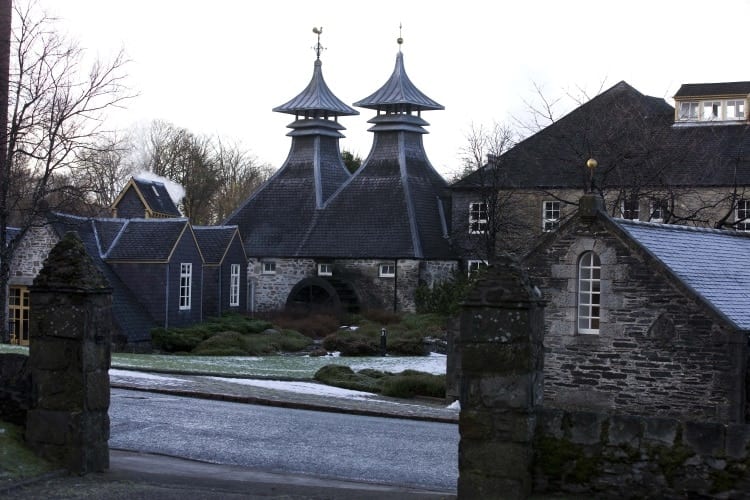
While certainly one of Scotland’s’ oldest distilleries, it’s also considered to be one of the prettiest ones. Visitors can participate in a self-guided tour, moving between the rooms, each of which contain a specific part of the production process, and the workers are happy to assist with any questions.
Strathisla Whiskies
Stratishla is one (or possibly the only) distillery to use 4 infusions of water during the mashing process. For maturation, Strathisla sticks to Bourbon casks.
As stated, most whisky distilled at Strathisla is used for blends, with very few bottlings released directly. However, there’s several independents out there, most noticeably by Gordon & MacPhail. The one official bottle released:
- 12 Year Old (released in 2004)
Distillery info:
Detail |
Information |
|---|---|
| Name | Strathisla |
| Region | Speyside |
| Country | Scotland |
| Logo | |
| Status | Active |
| Founded | 1786 |
| Water source | Fons Bulliens' Well |
| Malting floor | No |
| Owned by | Pernod Ricard |
| Address |
Strathisla Distillery +44 (0)1542 - 78 30 44 |
| Visitor centre | Yes |
| Website | http://www.chivas.com/en/int/heritage/strathisla/ |
| Map |
Distillery Setup:
Component |
Capacity |
Quantity |
|---|---|---|
| Mash tun | 5 tonnes | 1 (Stainless Steel with a copper dome) |
| Washback | 24,500 litres | 11 (Oregon pine) |
| Wash still | 12,000 litres | 2 |
| Spirit Still | 8,000 litres | 2 |
| Expected yearly output in LPA (Litres of pure alcohol) | 2,400,000 |
Images courtesy of Chivas Brothers / Pernod Ricard
Frequently Asked Questions
Strathisla is pronounced strath-EYE-luh. “Strath” is Gaelic for a broad river valley, and “Isla” is the name of the river that flows through it.
Strathisla means “shallow valley of the Isla”. Founded in 1785 by George Taylor on the banks of the River Isla in Keith, on land leased from the Earl of Seafield, it’s one of Scotland’s oldest working distilleries. Construction finished in 1786, when a license was granted to Milltown Distillery Co., a partnership between Taylor and Alexander Milne, and the distillery originally operated under the name Milltown.
In the early 1820s, the distillery was sold to a local saddler after Taylor suffered a riding accident. It changed hands again in 1825 to McDonald Ingram & Co., then to John McDonald & Co. in 1828, before William Longmore bought it in 1830. The distillery’s name officially changed to Strathisla in 1870, then to Milton in 1890, in reference to the nearby Milton Castle.
Yes, twice within a few years. A fire in 1876 destroyed most of the distillery’s machinery, and a dust explosion in 1879 destroyed further machinery and buildings. Reconstruction was swift, though, and the rebuilt distillery was fitted with its own bottling plant.
Around the outbreak of the Second World War, the majority of shares in the distillery ended up with Londoner George Pomeroy, a banker who was found to be selling the whisky on the black market. He was prosecuted and found guilty of tax evasion in 1949, forcing the distillery into bankruptcy.
The bankrupt distillery was bought at public auction by James Barclay, representing the Canadian company Seagram, for a mere 71,000 GBP. Seagram transferred it to Chivas Brothers Ltd, which it had also just acquired, and Chivas renamed the distillery back to Strathisla in 1951. Following the takeover, Strathisla’s whisky became an important part of the Chivas Regal blends. In 2001, Chivas was acquired by Pernod Ricard, which still runs the distillery today.
Strathisla is one of the very few distilleries, possibly the only one, to use four separate infusions of water during mashing. For maturation, it sticks to Bourbon casks.
Most whisky distilled at Strathisla goes into blends, particularly Chivas Regal, with very few official bottlings released directly. The main official release has been a 12 Year Old put out in 2004, though several independent bottlers, most notably Gordon & MacPhail, have released their own Strathisla expressions.
Yes. As well as being one of Scotland’s oldest distilleries, Strathisla is considered one of its prettiest. Visitors can take a self-guided tour through rooms dedicated to each stage of production, with staff on hand to answer questions.