A lot of people use the terms whisky and whiskey, and aren’t very sure which one of these is correct. And to answer that question, both actually are.
The word whisky stems from the (Scottish) Gaelic word “uisge-beatha“, which translates into “water of life”. In the past, all whisky, regardless of where it is produced, was spelled as “whisky” without the e.
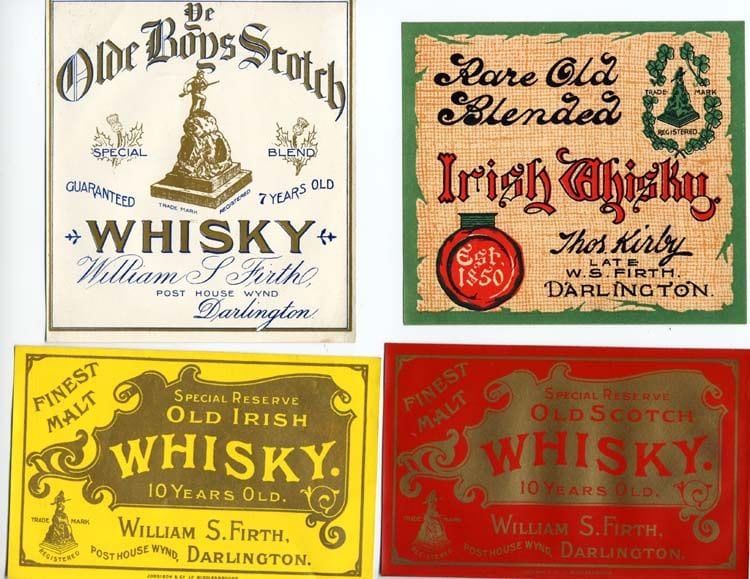
In the second half of the 19th century, Ireland was the leading producer of whisky, accounting for about 70% of the spirit made worldwide. In 1860, the Spirits Act was introduced, and allowed for the first time to blend malted barley with other types of grain whisky.
Scottish distillers happily took this opportunity to start the process of blending, as it meant a reduction in costs (yes, the jokes about stingy Scotsmen are not entirely based on fiction).
Irish whiskey
The Irish distillers looked for ways to distinguish their superior product, and started adding the e to “whiskey” as a way to do so. This was largely a decision made by individual distilleries, though, and uniformity wasn’t reached until roughly the 1960s.
American whiskey
American whiskey had a similar process. The large number of Irish moving to the USA most likely influenced the decision to go with the “e”, and the initial higher quality of the Irish spirit encouraged the American distillers to adopt “whiskey”.
This is still the case for most American whisky, though there certainly are exceptions. Maker’s Mark, for instance, labels their spirit as “whisky”.
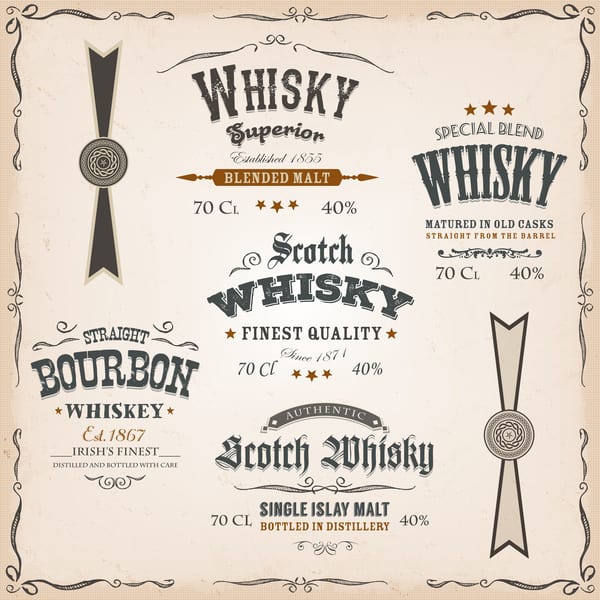
Whisky or whiskey
In modern days, consistency seems to have been found with Scottish whisky and American and Irish Whiskey. Distilleries in other countries mostly stick to using the version without an “e”.
Whisky
Whiskey
- United States
- Ireland
Frequently Asked Questions
Both spellings are correct. The difference is regional, not a matter of right or wrong. “Whisky” (no e) is standard in Scotland, Canada, Japan, and most other producing countries. “Whiskey” (with e) is standard in the United States and Ireland.
All whisky was originally spelled without an e, from the Gaelic uisge-beatha, meaning “water of life.” Irish distillers added the e in the 19th century to distinguish their product from Scotch, and American producers, shaped by Irish immigration, largely followed suit.
“Whisky” comes from the Gaelic phrase uisge-beatha, which translates to “water of life.” It’s the root word behind both the whisky and whiskey spellings used around the world today.
No. Maker’s Mark is a notable exception. It spells its product “whisky” without the e, as a nod to its founder’s Scottish heritage, even though “whiskey” is the standard American spelling.
“Whisky” is used in Scotland, Canada, Japan, England, and most other producing countries. “Whiskey” is used in the United States and Ireland. The spelling reflects historical branding choices, not a difference in the spirit itself.