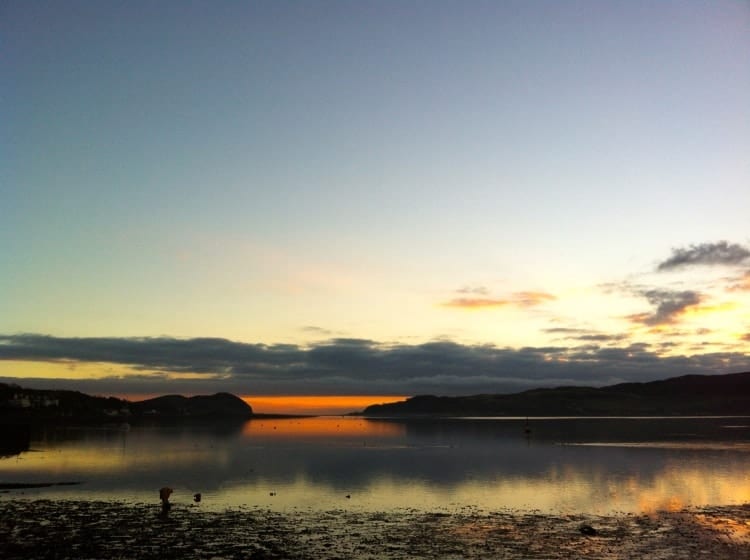
In the south-west of Scotland, on the Kintyre peninsula, we find the city (doubling as a whisky region) of Campbeltown. An area steeped in history, the town was home to the parliament of the Celtic Kingdom of the Scots, which grew out into a monarchy covering all of Scotland and most of Great Britain. The area was also home to Mary Campbell, who took a place in history after courting famous Scottish poet Robert Burns, and immortalized in his song “Sweet Highland Mary”. It’s also the part of Scotland closest to Ireland, and on bright days, it’s possible to see the Irish coast with the naked eye.
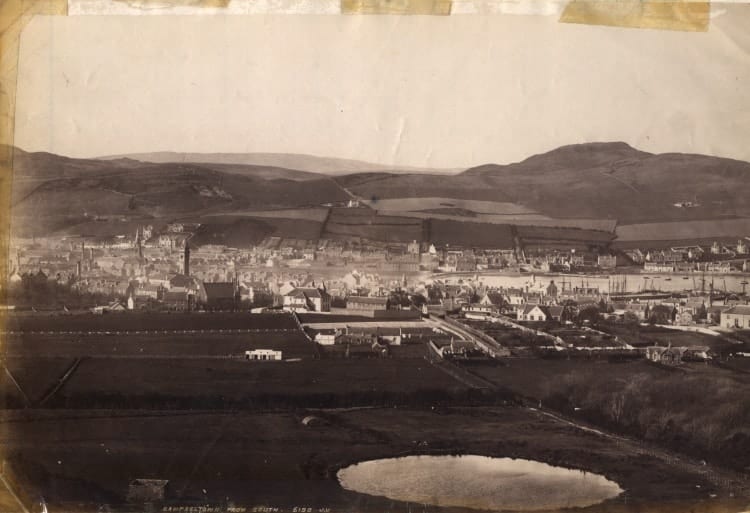
In the past, Campbeltown was the undisputed “whisky capital of the world”, sporting over thirty active distilleries. Abundance of water, coal and peat as well as easy access to all the barley one needed in order to distill, and Campbeltown being conveniently located near the coast, it made for an ideal location for producing Scottish whisky in the late nineteenth century.
Then the twentieth century came and crashed the party. The amount of distilleries at the time led to overproduction, and quality suffered as a result. Then came the depression, with US Prohibition acting as the final nail in the coffin: no fewer than 17 Campbeltown distilleries closed their doors in the 1920s alone. By the end of that decade, only Rieclachan remained in production, and even that closed for good in 1934, leaving Springbank and Glen Scotia as the sole survivors. In 2004, the Mitchell’s Glengyle distillery opened, officially putting Campbeltown back on the list of active whisky-producing regions with three names once again.
A protected region in its own right
Campbeltown holds a status most drinkers don’t realise: it’s one of only five whisky-producing areas in Scotland with legal protection under the Scotch Whisky Regulations 2009, alongside Highland, Lowland, Speyside and Islay. That means a whisky can only carry “Campbeltown” on its label if it was actually distilled here, the same protection that stops a Speyside distillery calling itself Islay. The popular “Islands” category, by contrast, has no such legal standing and is officially classed as part of Highland. It’s a small detail, but it’s part of why Campbeltown, despite having a fraction of the distilleries of somewhere like Speyside, has kept its own identity on the whisky map.
Campbeltown’s character
Campbeltown whisky is typically slightly peaty and distinctly briny, a legacy of the town’s coastal position, with full flavours and full bodies that set it apart from its Highland and Lowland neighbours. Its three surviving distilleries each take that character in a different direction: Springbank leans smoky and maritime, Glen Scotia is lighter with grassy notes, and Glengyle’s Kilkerran is lighter and sweeter still, but keeps the trademark oiliness and salt.
There are currently 3 active distilleries in Campbeltown:
- Glengyle (Kilkerran) – Reopened in 2004 on the site of the original 1872 distillery, sold under the name Kilkerran to avoid clashing with an existing blend called Glengyle
- Glen Scotia – Said to be haunted by the ghost of an owner who drowned himself in the loch that still supplies the distillery’s water
- Springbank – Scotland’s oldest independently owned distillery, still run by descendants of its founding family, malting, distilling and bottling entirely on site
A region on the rise again
For the first time in over 180 years, Campbeltown is seeing genuine expansion. Three new distilleries are currently in development:
- Witchburn Distillery, built by independent bottler Brave New Spirits on the site of the former RAF Machrihanish airbase, has its equipment installed and is expected to begin production during 2026.
- The Machrihanish Distillery, from Isle of Raasay owner R&B Distillers, began construction in 2025 on a working farm at Dhurrie, with a farm-to-bottle single malt planned.
- Dál Riata Distillery, on Kinloch Road overlooking Campbeltown Loch, received its building warrant in June 2025 and is currently under construction, with a museum and visitor centre planned alongside the distillery itself.
The ghosts of Campbeltown’s lost distilleries
Of the thirty-plus distilleries that once operated here, a few names are still worth knowing:
Hazelburn (founded 1825, closed 1926) is where Masataka Taketsuru, the man later credited as the father of Japanese whisky and founder of Nikka, completed part of his distilling apprenticeship before returning home to build Yoichi. Springbank revived the name decades later for its unpeated, triple-distilled single malt.
Longrow (closed 1896) never made it into the twentieth century, but two of its buildings were bought by J & A Mitchell & Co, Springbank’s owner, in 1971 and are still used today as a warehouse and bottling plant. The name lives on as Springbank’s heavily peated release.
Rieclachan (founded around 1825, closed 1934) has the distinction of being the very last of the old Campbeltown distilleries standing after the 1920s collapse, briefly leaving it as the region’s sole producer before it too shut its doors, three years before Glen Scotia restarted.
The remaining closed distilleries include:
- Albyn
- Ardlussa
- Argyll
- Ballegreggan
- Benmore
- Burnside
- Caledonian
- Campbeltown
- Dalaruan
- Dalintober
- Drumore
- Glenramskill
- Glengyle (original, 1872 to 1925, distinct from the modern Glengyle)
- Glen Nevis
- Glenside
- Highland
- Kinloch
- Kintyre
- Lochhead
- Lochruan
- Lochside
- Meadowburn
- Mossfield
- Mountain Dew (Originally named Thistle)
- Springside
- Toberanrigh
- Union
Images courtesy of Springbank distillery.